Radar
Videos
Radar is a system that uses radio waves to determine the distance, direction, and radial velocity of objects relative to the site. It is a radiodetermination method used to detect and track aircraft,
Long-range radar antenna, used to track space objects and ballistic missiles.
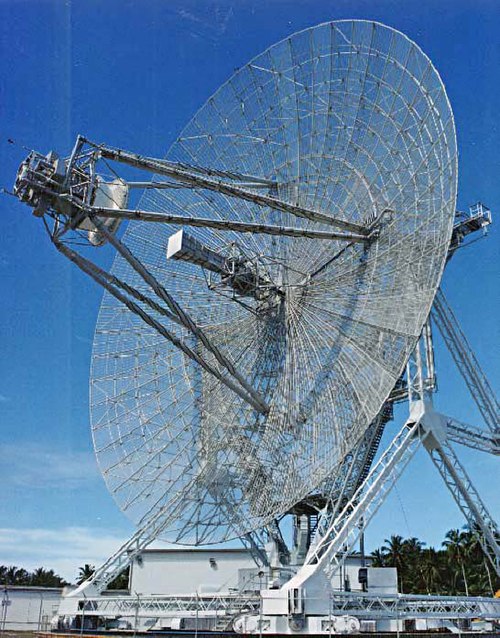

Radar of the type used for detection of aircraft. It rotates steadily, sweeping the airspace with a narrow beam.
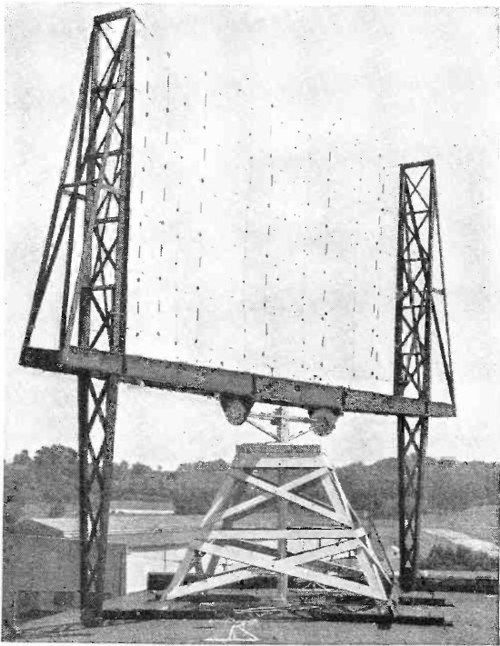
Experimental radar antenna, US Naval Research Laboratory, Anacostia, D. C., from the late 1930s (photo taken in 1945)

The first workable unit built by Robert Watson-Watt and his team
Cavity magnetron
Videos
The cavity magnetron is a high-power vacuum tube used in early radar systems and subsequently in microwave ovens and in linear particle accelerators. A cavity magnetron generates microwaves using the
Radar
…speeds. This device was developed secretly for military use by several countries in the period before and during World War II. A key development was the cavity magnetron in the United Kingdom, which allowed the creation of relatively small systems with sub-meter resolution. The modern uses of radar are highly diverse…

Magnetron with section removed to exhibit the cavities. The cathode in the center is not visible. The antenna emitting microwaves is at the left. The magnets producing a field parallel to the long axis of the device are not shown.

A similar magnetron with a different section removed. Central cathode is visible; antenna conducting microwaves at the top; magnets are not shown.

Obsolete 9 GHz magnetron tube and magnets from a Soviet aircraft radar. The tube is embraced between the poles of two horseshoe-shaped alnico magnets (top, bottom), which create a magnetic field along the axis of the tube. The microwaves are emitted from the waveguide aperture (top) which in use is attached to a waveguide conducting the microwaves to the radar antenna. Modern tubes use rare-earth magnets, electromagnets or ferrite magnets which are much less bulky.

Split-anode magnetron (c. 1935). (left) The bare tube, about 11 cm high. (right) Installed for use between the poles of a strong permanent magnet