Rakshasa
Videos
Rakshasa are a race of usually malevolent beings prominently featured in Hinduism, Buddhism, Jainism, and Indonesian folk Islam. They reside on Earth but possess supernatural powers, which they usuall
The three headed rakshasa Trishiras sits in lalitasana on a throne facing a fire altar in which a severed head is burning


Painting depicting Ravana, the king of rākṣasas, cutting off Jatayu's wing while abducting Sita, by Raja Ravi Varma

Painting of Rakshasa as one of the Twelve Devas of the Vajrayana tradition. Japan, Heian period, 1127 CE.

Rakshasa as a single deity, depicted on a page from a folio describing deities from the Diamond Realm and Womb Realm. Japan, Heian period, 12th century.
Deva (Hinduism)
Videos
Deva means 'shiny', 'exalted', 'heavenly being', 'divine being', 'anything of excellence', and is also one of the Sanskrit terms used to indicate a deity in Hinduism. Deva is a masculine term; the fem
Rakshasa
…as disrupting Vedic sacrifices or eating humans. The term is also used to describe asuras, a class of power-seeking beings that oppose the benevolent devas. They are often depicted as antagonists in Hindu scriptures, as well as in Buddhism and Jainism. The feminine form of rakshasa is rakshasi (राक्षसी…
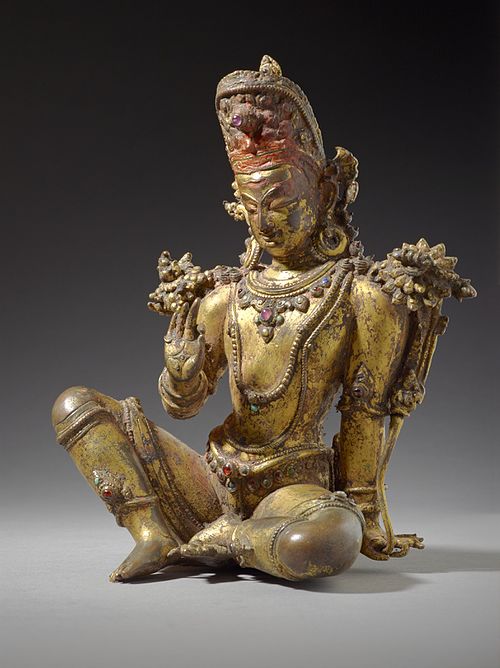
In the earliest Vedic literature, Devas are benevolent supernatural beings; above, a gilt-copper statue of Indra, "Chief of the Gods", from 16th-century Nepal.

Shiva/Rudra has been a major Deva in Hinduism since the Vedic times. Above is a meditating statue of him in the Himalayas with Hindus offering prayers.

The 12 Devas protecting Buddha, by Tani Bunchō. The Hindu Devas were adopted by Japanese Buddhists in the first millennium as Jūni-ten

Vishnu (above) is one of the Vedic Devas. The third Valli of the Katha Upanishad discusses ethical duties of man through the parable of the chariot as a means to realize the state of Vishnu, one with Self-knowledge.