Rampart (fortification)
Videos
In fortification architecture, a rampart is a length of embankment or wall forming part of the defensive boundary of a castle, hillfort, settlement or other fortified site. It is usually broad-topped

The multiple ramparts of the British Camp hillfort in Herefordshire

Earth ditch and rampart defences on the Ipf near Bopfingen, Germany

Reconstructed pfostenschlitzmauer of the oppidum at Finsterlohr, Creglingen, Germany
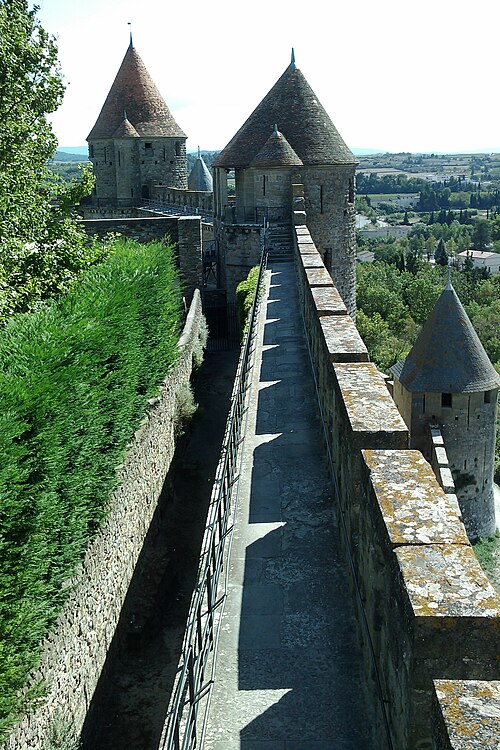
The rampart of the Cité de Carcassonne in the Aude department of France. Originally constructed in the 4th century AD by the Romans, they were largely rebuilt in 1240 and heavily restored in the 19th century
Bastion fort
Videos
A bastion fort or trace italienne is a fortification in a style developed during the early modern period in response to the ascendancy of gunpowder weapons such as cannon, which rendered earlier medie
Features of bastion forts - Table of Fortification, from the 1728 Cyclopaedia

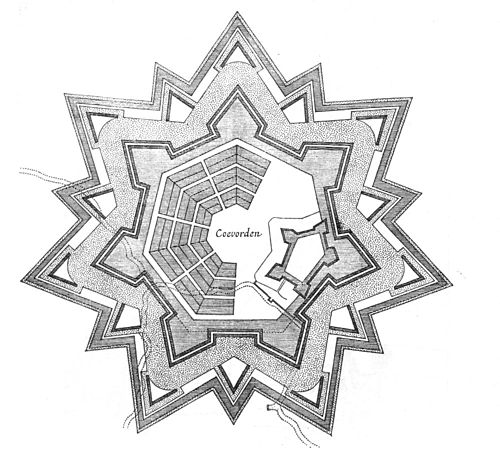
Fortification plan of Coevorden, laid out in a radial pattern within polygonal fortifications and extensive outer earthworks as rebuilt in the early seventeenth century by Maurice, Prince of Orange

Ideal fortified city: a plan of Nové Zámky (Neuhäusel) in Slovakia, built in 1663, drawn c. 1680

Plan of Geneva in 1841. The colossal fortifications, among the most important in Europe, were demolished ten years later.