Listed in the table below are the rank insignia of the British Army. Badges for field officers were introduced in 1810 and the insignia was moved to the epaulettes in 1880. On ceremonial or parade uni

Bernard Montgomery in a staff car in 1944, displaying the star plate of a general and the car flag of an army group commander, the Union Flag, as GOC-in-C, 21st Army Group.

The rank insignia for officers are also differentiated by what specific stars are used. Left to right: Grenadier, Coldstream, and Welsh Guards (Garter); Scots Guards (Thistle); Irish Guards (Shamrock); other army officers (Bath).
Field marshal has been the highest rank in the British Army since 1736. A five-star rank with NATO code OF-10, it is equivalent to an Admiral of the Fleet in the Royal Navy or a Marshal of the Royal A
Ranks and insignia of the officers of the British Army
…officer Regiment/battalion commanding officer Squadron/battery/company officer commanding Squadron/battery/company 2IC Troop/platoon commander Rank Field marshal General Lieutenant-general Major-general Brigadier Colonel Lieutenant colonel Major Captain Lieutenant Second lieutenant Officer cadet Abbreviation FM…

Charles III in the no. 4 warm weather service dress of a field marshal in the British Army
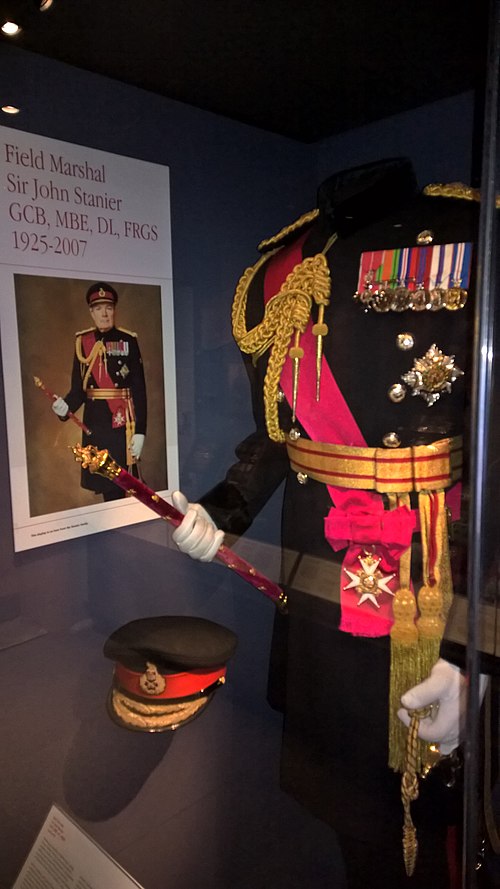
Field Marshal's uniform and baton (pertaining to the late Sir John Stanier) on display in the Royal Scots Dragoon Guards Museum, Edinburgh Castle.
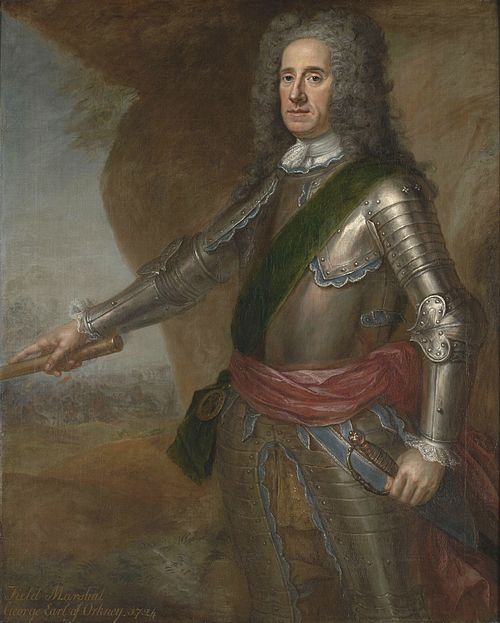
1st Earl Of Orkney
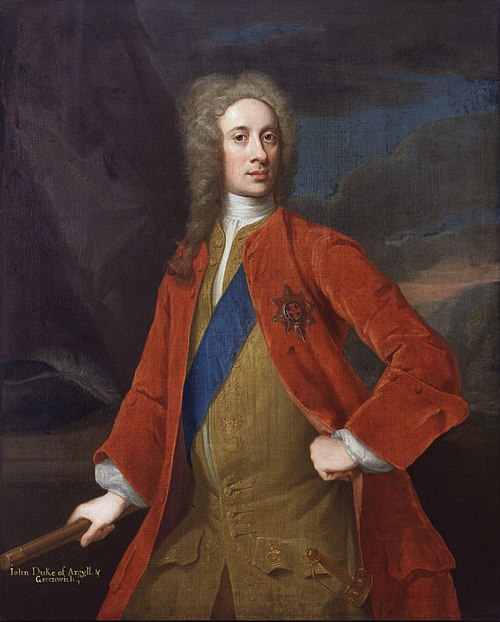
John Campbell, 2nd Duke of Argyll and Duke of Greenwich by William Aikman