Rasiya
Videos
Photos
Rasiya is a popular genre of Indian folk music from the Braj region of Uttar Pradesh. The style of rasiya consists of multiple sub genres and is performed in a variety of different contexts. The songs have been known to portray a wide range of topics however, they are most commonly sung to a set of stock tunes that often portrays the love of the Hindu god Krishna and goddess Radha. The term rasiya is the Hindi word for “epicure” which refers to the male suitors, or the god Krishna himself as depicted in the songs. Rasiya's are sung and typically played with a variety of instruments, the most common are the “dholak” drums, sarangi, and harmonium. This style of music is commonly associated with the popular ancient Hindu festival of Holi and is often performed by villagers, professional entertainers, as well as participants in temple song sessions.

Harmonium

Sarangi

Dholak
Radha
Videos
Photos
Radha, also called Radhika, is a Hindu goddess and the chief consort of the god Krishna. She is the goddess of love, tenderness, compassion, and devotion. In scriptures, Radha is mentioned as the avatar of Lakshmi and also as the Mūlaprakriti, the Supreme goddess, who is the feminine counterpart and internal potency of Krishna. Radha accompanies Krishna in all his incarnations. Radha's birthday is celebrated every year on the occasion of Radhashtami.

Radha at ISKCON Temple, Pune

14th-century fresco of Radha (right) and Krishna (left, playing flute) in Udaipur, Rajasthan.

Jayadeva recites the mantra to Radha Krishna by Manaku.
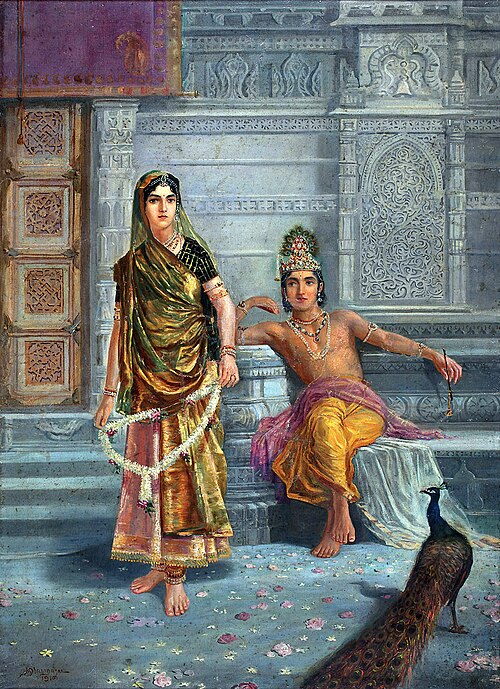
Painting of Radha with Krishna, by M. V. Dhurandhar, 1915.