Red-billed oxpecker
Videos
The red-billed oxpecker is a passerine bird in the oxpecker family, Buphagidae. It is native to the eastern savannah of sub-Saharan Africa, from the Central African Republic east to South Sudan and so


Clutch in a nest lined with impala hair, Kenya

Perched on an impala ewe

Adult (L) and sub-adult (R) on impala
Giraffe
Videos
Giraffes are large African hoofed mammals. They are the tallest living terrestrial animals and the largest ruminants on Earth. They are classified under the family Giraffidae, along with their closest

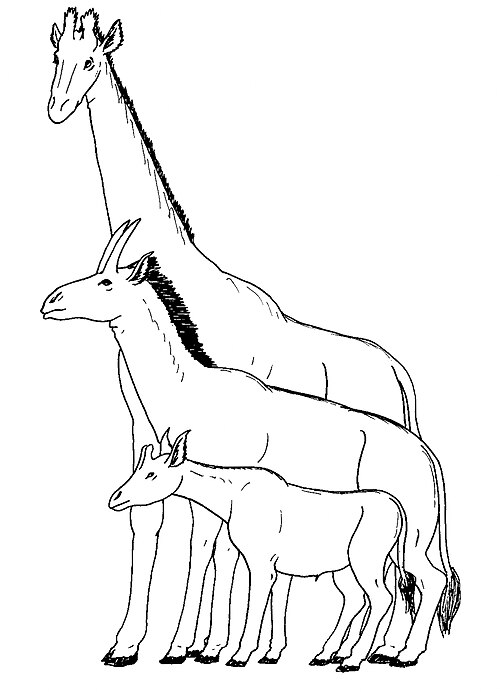
The extinct giraffid Samotherium (middle) in comparison with the okapi (below) and giraffe. The anatomy of Samotherium appears to have shown a transition to a giraffe-like neck.
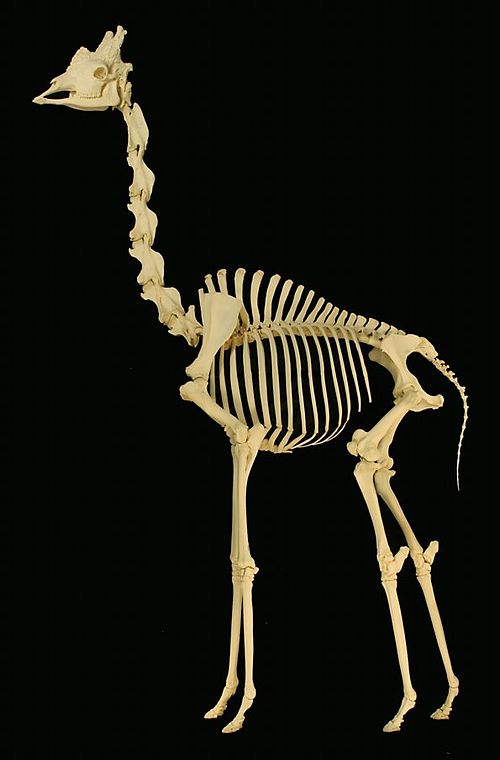
Giraffe skeleton on display at the Museum of Osteology, Oklahoma City

Closeup of the head of a Southern giraffe