Refrigerant
Videos
Refrigerants are working fluids that carry heat from a cold environment to a warm environment while circulating between them. For example, the refrigerant in an air conditioner carries heat from a coo

In the stratosphere, ozone (O3) naturally cycles to oxygen gas (O2) and back when it absorbs solar energy (the Chapman cycle). When CFCs are present, sunlight releases chlorine atoms that catalytically convert O3 to O2: Cl reacts with O3 to form ClO and O2, and ClO is then converted back to Cl, which can destroy further ozone. The net result is more oxygen and less ozone.

Disposable refrigerant gas cylinders, using different colors for different refrigerants. (Current guidelines discourage color-coded cylinders.)
Vapour-compression refrigeration or vapor-compression refrigeration system, in which the refrigerant undergoes phase changes, is one of the many refrigeration cycles and is the most widely used method
Refrigerant
…with the specific choice depending on the temperature range needed and constraints related to the system involved. Refrigerants are the basis of vapor compression refrigeration systems. The refrigerant is circulated in a loop between the cold and warm environments (see figure). In the low-temperature environment, the refrigerant…

Lysholm screw compressor
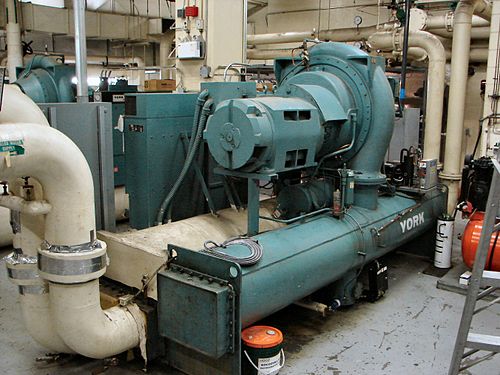
Figure 5: Commercial water-cooled liquid chiller installation for building air conditioning

Ferdinand Carré's ice-making device