Regalia of the Pharaoh
Videos
The Regalia of the Pharaoh or Pharaoh's attributes are the symbolic objects of royalty in ancient Egypt. In use between 3150 and 30 BC, these attributes were specific to pharaohs, but also to certain
Pharaoh Akhenaten and his regalia, the headdress, the pschent, the false beard and the uraeus.


Representation of Pharaoh Thutmose I and his wife. Copy of a fresco from Deir el-Bahari, 18th dynasty.

Psamtik I crowned with the pschent - 26th Dynasty - Theban necropolis.

Senusret III wearing the white crown, Musée du Louvre.
Pharaoh
Videos
The Pharaoh was the monarch of ancient Egypt. The title came into use from the Eighteenth Dynasty onwards and was subsequently attributed to all the previous kings of Egypt. Before this Pharaoh was a
Regalia of the Pharaoh
…are the symbolic objects of royalty in ancient Egypt (crowns, headdresses, scepters). In use between 3150 and 30 BC, these attributes were specific to pharaohs, but also to certain gods such as Atum, Ra, Osiris, and Horus. In Egyptian mythology, these powerful gods were considered the original holders of royal…
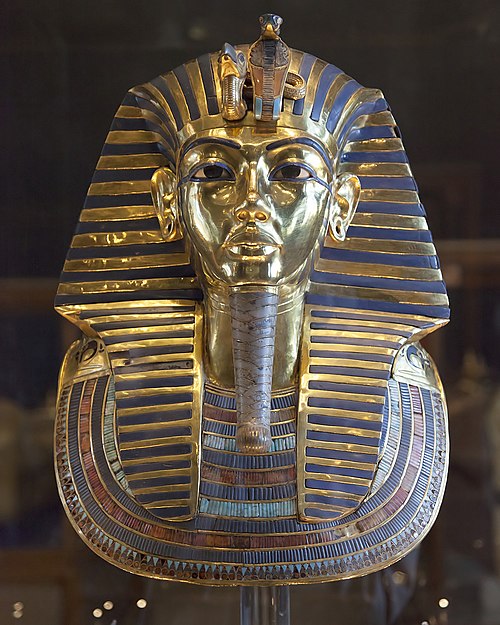
The Mask of Tutankhamun from tomb KV62 in the Valley of the Kings. Pharaohs' tombs were provided with vast quantities of wealth

The Narmer Palette depicts the unification of the Two Lands.

A guardian statue wearing the red crown which reflected the facial features of the reigning king, probably Amenemhat II or Senwosret II, and which functioned as a divine guardian for the imiut. Made of cedar wood and plaster c. 1919–1885 BCE

Uraeus depicted on king Den, ivory label found at his tomb in Abydos, c. 3000 BCE, British Museum, London