Reproduction
Videos
Reproduction is the biological process by which new individual organisms – offspring – are produced from their parent or parents. There are two forms of reproduction: asexual and sexual.

Production of new individuals along a leaf margin of the miracle leaf plant (Kalanchoe pinnata). The small plant in front is about 1 cm (0.4 in) tall. The concept of "individual" is obviously stretched by this asexual reproductive process.
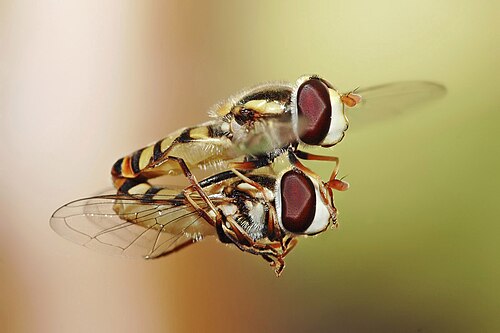
Hoverflies mate in midair flight

Birds, reptiles, and mammals reproduce by internal fertilization. Male mammals ejaculate semen through the penis into the vagina during copulation.

Tree of life by Haeckel
Sexually reproducing animals, plants, fungi and protists are thought to have evolved from a common ancestor that was a single-celled eukaryotic species. Sexual reproduction is widespread in eukaryotes
Reproduction
…of an organism is a form of asexual reproduction. By asexual reproduction, an organism creates a genetically similar or identical copy of itself. The evolution of sexual reproduction is a major puzzle for biologists. The two-fold cost of sexual reproduction is that only 50% of organisms reproduce, and organisms only pass on 50% of…

Ladybirds mating

Pollen production is an essential step in sexual reproduction of seed plants.

Schematic illustration of the advantage of the first sexual individual resulting from the seesaw effect. Possible combinations of the sex allele (S) and non-sex allele (N) entering the clean genome (C) or dirty genome (D) are shown. S (dominant over N) controls meiosis and fusion. α is the deviation from equal division of dms (deleterious genes) over two genomes. The first automictic selfing event is successful with a 50% probability.

Darwin's finches by Gould