Retroreflective sheeting is flexible retroreflective material primarily used to increase the nighttime conspicuity of traffic signs, high-visibility clothing, and other items so they are safely and effectively visible in the light of an approaching driver's headlamps. They are also used as a material to increase the scanning range of barcodes in factory settings. The sheeting consists of retroreflective glass beads, microprisms, or encapsulated lenses sealed onto a fabric or plastic substrate. Many different colors and degrees of reflection intensity are provided by numerous manufacturers for various applications. As with any retroreflector, sheeting glows brightly when there is a small angle between the observer's eye and the light source directed toward the sheeting but appears nonreflective when viewed from other directions.
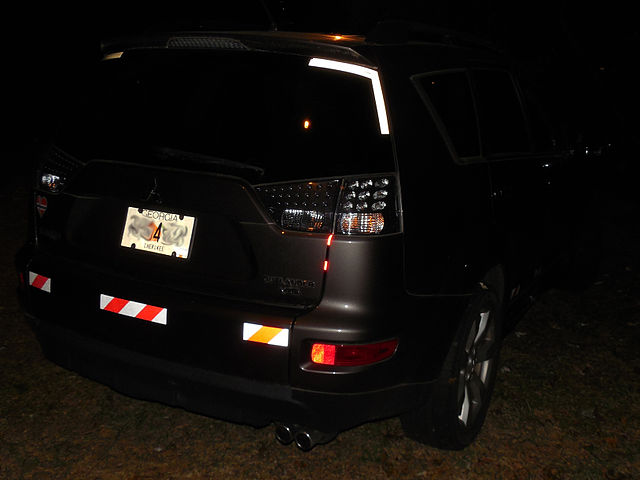
Flash photo of car with reflective stickers
Flash photo of moped with Retroreflective sheeting tape
Image: Warnweste gelb
Image: Reflektor 11
A retroreflector is a device or surface that reflects radiation back to its source with minimum scattering. This works at a wide range of angle of incidence, unlike a planar mirror, which does this only if the mirror is exactly perpendicular to the wave front, having a zero angle of incidence. Being directed, the retroflector's reflection is brighter than that of a diffuse reflector. Corner reflectors and cat's eye reflectors are the most used kinds.
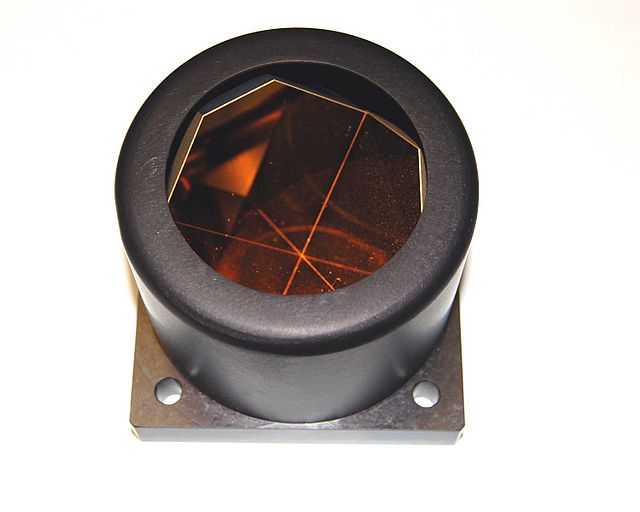
A gold corner cube retroreflector
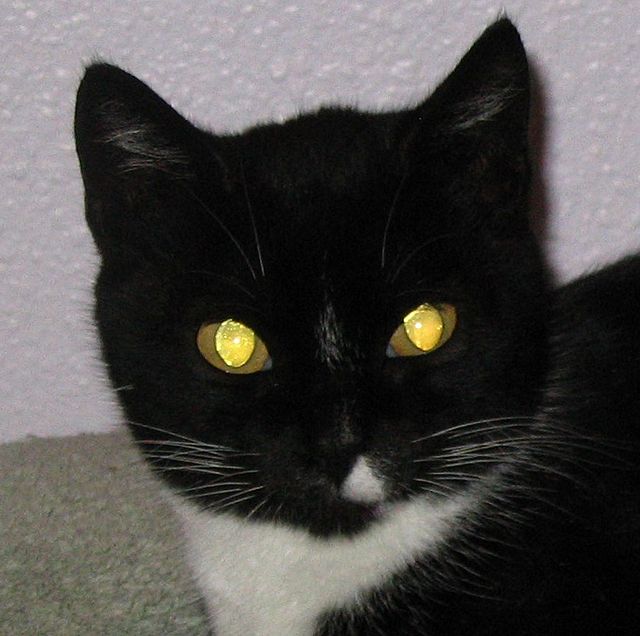
Eyeshine from retroreflectors of the transparent sphere type is clearly visible in this cat's eyes.
Bicycle retroreflectors
"Aura" around the shadow of a hot-air balloon, caused by retroreflection from dewdrops