Reuse of human excreta
Videos
Reuse of human excreta can be safe or unsafe. Beneficial uses of the treated excreta may focus on using the plant-available nutrients that are contained in the treated excreta. They may also make use

Harvest of capsicum grown with compost made from human excreta at an experimental garden in Haiti

A sewage farm in Hampshire, England

Comparison of spinach field with (left) and without (right) compost, experiments at the SOIL farm in Port-au-Prince, Haiti

Application of urine on a field near Bonn, Germany, by means of flexible hose close to the soil
Human feces
Videos
Human feces or faeces, commonly and in medical literature more often called stool, commonly referred to as poo or poop, are the solid or semisolid remains of food that could not be digested or absorbe
Reuse of human excreta
…kg potassium as feces per year. The yearly mass is 51 kg wet and 11 kg dried, so that wet feces would have a NPK% value of 1.1:0.8:0.9. Reuse of dried feces from urine-diverting dry toilets after post-treatment can result in increased crop production through fertilizing effects of nitrogen, phosphorus…
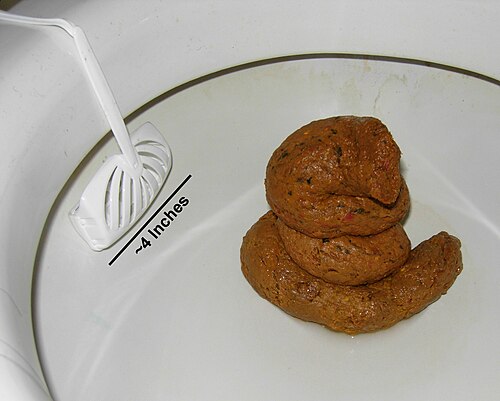
Human feces photographed in a toilet, shortly after defecation.

Fresh feces collected from a child for a drying experiment

Feces after drying in an experiment to determine moisture content