Richard Whittington
Videos
Richard Whittington of the parish of St Michael Paternoster Royal, City of London, was an English merchant and politician of the late medieval period. He is also the real-life inspiration for the Engl
Richard Whittington, stained glass in the Guildhall, City of London


Whittington on his deathbed: at his side the four executors of his will, John Coventre, John White, clerk, John Carpenter, and William Grove, with many of the beneficiaries of his charities at the foot of his bed. A physician examines a bottle of urine.

"Portraits of Sir Richard Whittington & his cat". Printed in New Wonderful Museum, Vol. III (1805), "from the original painting at Mercers' Hall".

Arms of Sir Richard Whittington
Mercery
Videos
Mercery initially referred to silk, linen and fustian textiles among various other piece goods imported to England in the 12th century. Eventually, the term evolved to refer to a merchant or trader of
Richard Whittington
…under the system of primogeniture he would not expect to inherit his father's estate, and thus was sent to the City of London to learn the trade of mercer through an apprenticeship. He was a contemporary of John Abbot who was the first mercer to leave property to the Mercers' Company to support a school…

A mercery (mercer's shop) in Brussels

Streetscape of Mercery Lane in Canterbury, where mercers used to produce and sell wares in the Middle Ages
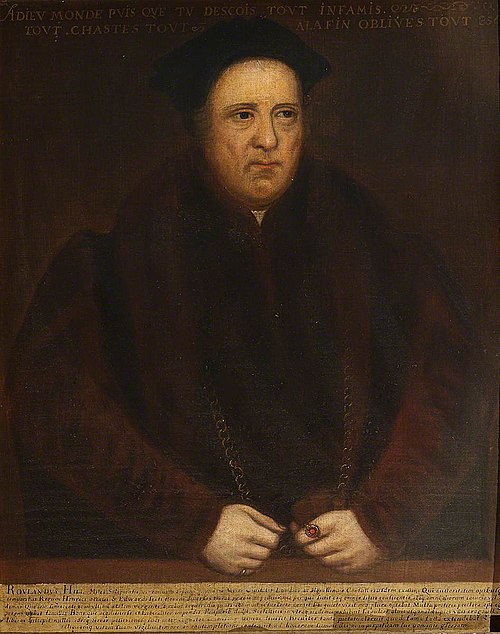
Sir Rowland Hill, repeatedly master of the Worshipful Company of Mercers was Lord Mayor, privy councillor, statesman, scholar, merchant and philanthropist who also coordinated the Geneva Bible translation.

Stained glass which shows the Worshipful Company of Mercers' arms