Rigveda
Videos
The Rigveda or Rig Veda is an ancient Indian collection of Vedic Sanskrit hymns (sūktas). It is one of the four sacred canonical Hindu texts (śruti) known as the Vedas. Only one Shakha of the many survive today, namely the Śakalya Shakha. Much of the contents contained in the remaining Shakhas are now lost or are not available in the public forum.
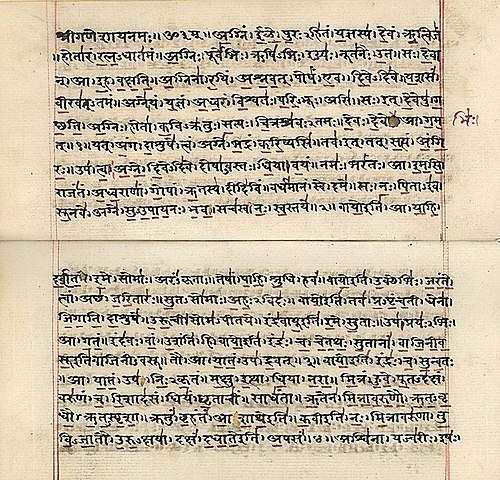
Rigveda (padapāṭha) manuscript in Devanāgarī, early 19th century. After a scribal benediction (śrīgaṇéśāyanamaḥ oṁ), the first line has the first pada, RV 1.1.1a (agniṃ iḷe puraḥ-hitaṃ yajñasya devaṃ ṛtvijaṃ). The pitch-accent is marked by underscores and vertical overscores in red.

Rigveda manuscript page, Mandala 1, Hymn 1 (Sukta 1), lines 1.1.1 to 1.1.9 (Sanskrit, Devanagari script)

Devi sukta, which highlights the goddess tradition of Hinduism is found in Rigveda hymns 10.125. It is cited in Devi Mahatmya and is recited every year during the Durga Puja festival.

The hymn 10.85 of the Rigveda includes the Vivaha-sukta (above). Its recitation continues to be a part of Hindu wedding rituals.
Dāna
Videos
Dāna is a Sanskrit and Pali word that connotes the virtue of generosity, charity or giving of alms, in Indian religions and philosophies.


In Buddhist culture, dāna (donation) is any relinquishing of ownership to a recipient without expecting anything in return.

The Buddha and a monk are shown in a relief from Borobudur, Indonesia, making an alms round.

Three monks chanting in Lhasa, Tibet. 1993.