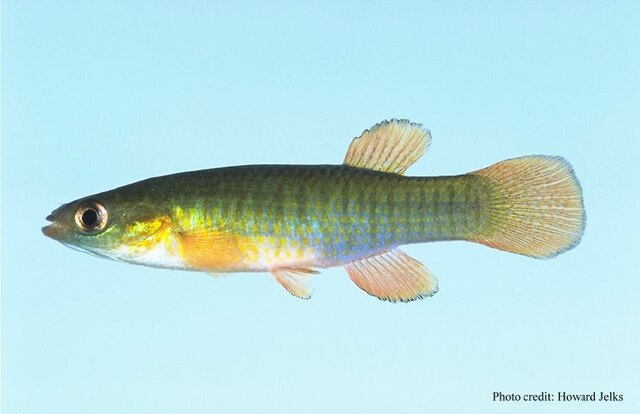
The Rivulidae are a family of killifishes in the order Cyprinodontiformes. They are commonly known as rivulids, South American killifish or New World killifish. The latter names are slightly misleading, however, as they are neither restricted to South America, though most are in fact found there, nor are they the only killifishes from the Americas. Occasionally, they are still referred to as rivulines, a term dating back to when they were considered a subfamily of the Aplocheilidae.
Rivulidae
A killifish is any of various oviparous (egg-laying) cyprinodontiform fish, including families Aplocheilidae, Cyprinodontidae, Fundulidae, Nothobranchiidae, Profundulidae and Valenciidae. All together, there are 1,270 species of killifish, the biggest family being Rivulidae, containing more than 320 species. As an adaptation to living in ephemeral waters, the eggs of most killifish can survive periods of partial dehydration. Many of the species rely on such a diapause, since the eggs would not survive more than a few weeks if entirely submerged in water. The adults of some species, such as Kryptolebias marmoratus, can additionally survive out of the water for several weeks. Most killies are small fish, from 2.5 to 5 centimetres, with the largest species growing to just under 15 centimetres (6 in).
A bluefin notho killifish, Nothobranchius rachovii, from East Africa
Fundulus auroguttatus, a non-annual North American killifish similar to Fundulus chrysotus known as a topminnow