Rocket engine
Videos
A rocket engine, also known as a rocket motor, is a reaction engine, producing thrust in accordance with Newton's third law by ejecting reaction mass rearward, usually a high-speed jet of high-tempera
RS-68 being tested at NASA's Stennis Space Center


Viking 5C rocket engine used on Ariane 1 through Ariane 4

The landing burn of reusable boosters like SpaceX Falcon is a prominent example of extreme thrust-vectoring application.

Armadillo Aerospace's quad vehicle showing visible banding (shock diamonds) in the exhaust jet
Rocket propellant
Videos
Rocket propellant is used as a reaction mass ejected from a rocket engine to produce thrust. The energy required can either come from the propellants themselves, as with a chemical rocket, or from an
Rocket engine
…accordance with Newton's third law by ejecting reaction mass rearward, usually a high-speed jet of high-temperature gas produced by the combustion of rocket propellant stored inside the rocket. Space vehicles carry their own oxidizer, unlike most combustion engines such as pulse engines or jet engines, so they can be…
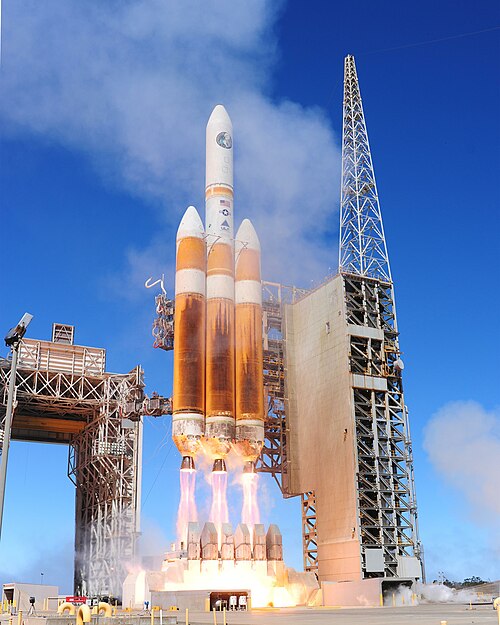
A Delta IV Heavy during liftoff. The rocket is launched using liquid hydrogen and liquid oxygen cryogenic propellants.