Roger Williams
Videos
Roger Williams was an English-born New England minister, theologian, author, and founder of the Providence Plantations, which became the Colony of Rhode Island and Providence Plantations and later the
Roger Williams (1872)


Williams attended Pembroke College, Cambridge

The Jonathan Corwin House was long purported to be Williams's residence in Salem

The Banishment of Roger Williams (c. 1850) by Peter F. Rothermel
Rhode Island
Videos
Rhode Island is a state in the New England region of the Northeastern United States. It borders Connecticut to its west; Massachusetts to its north and east; and the Atlantic Ocean to its south via Rh
Roger Williams
…minister, theologian, author, and founder of the Providence Plantations, which became the Colony of Rhode Island and Providence Plantations and later the State of Rhode Island. He was a staunch advocate for religious liberty, separation of church and state, and fair dealings with the Native Americans. Initially a Puritan…

In 1636, Roger Williams and his followers founded the settlement of Providence Plantations.
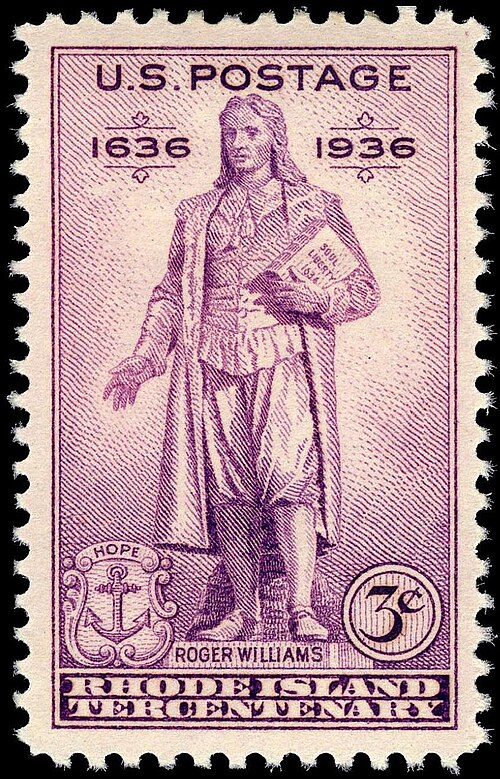
In 1936, on the 300th anniversary of the settlement of Rhode Island in 1636, the U.S. Post Office issued a commemorative stamp, depicting Roger Williams

In 1680, Newport was the third largest Anglo-American city. It remained a prosperous population center until the 1770s.

Providence Revolutionaries burned HMS Gaspee in Warwick in protest of British customs laws.