Roman Republic
Videos
The Roman Republic was the era of classical Roman civilisation beginning with the overthrow of the Roman Kingdom and ending in 27 BC with the establishment of the Roman Empire following the War of Act
The "Capitoline Brutus", a bust possibly depicting Lucius Junius Brutus, who led the revolt against Rome's last king and was a founder of the Republic

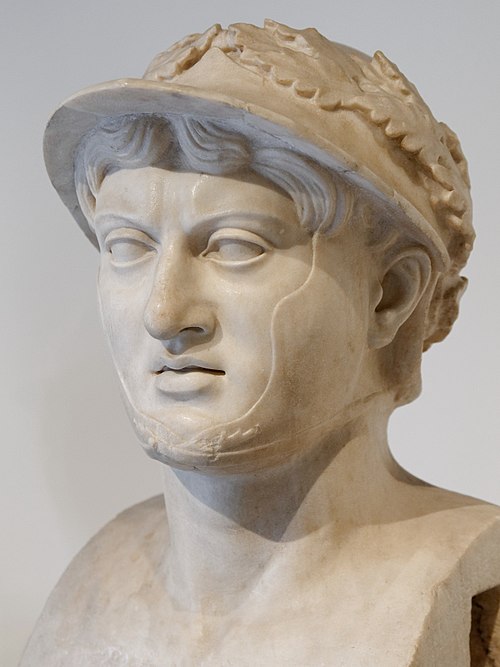
Bust of Pyrrhus, found in the Villa of the Papyri at Herculaneum, now in the Naples Archaeological Museum

Coin of Hiero II of Syracuse

Temple of Janus as seen in the present church of San Nicola in Carcere, in the Forum Holitorium of Rome, Italy, dedicated by Gaius Duilius after his naval victory at the Battle of Mylae in 260 BC
Roman Kingdom
Videos
The Roman Kingdom, also known as the Roman monarchy and the regal period of ancient Rome, was the earliest period of Roman history, when the city and its territory were ruled by kings. According to tr
Roman Republic
…The Roman Republic (Latin: Res publica Romana, pronounced ) was the era of classical Roman civilisation beginning with the overthrow of the Roman Kingdom (traditionally dated to 509 BC) and ending in 27 BC with the establishment of the Roman Empire following the War of Actium. During this period, Rome's…

The ancient quarters of Rome

Shards of terracotta decorative plaques, sixth century BC (Roman Kingdom and Etruscan period), found in the Roman Forum, now in the Diocletian Baths Museum, Rome

Numa depicted on a 48 BC denarius

Ancus Marcius depicted on a 57 BC denarius