Roman imperial cult
Videos
The Roman imperial cult identified emperors and some members of their families with the divinely sanctioned authority of the Roman State. Its framework was based on Roman and Greek precedents, and was
Venus and Mars sculpture group reworked to portray an Imperial couple (created 120–140 AD, reworked 170–175)


Repoussé pendant of Alexander the Great, horned and diademed like Zeus Ammon; images of Alexander were worn as magic charms (4th-century Roman).

Ruins of a hero-shrine or heroön at Sagalassos, Turkey

Denarius of C. Cossutius Maridianus, 44 BC, with the head of Julius Caesar on the obverse. The legend mentions PARENS PATRIAE
Imperial cult
Videos
An imperial cult is a form of state religion in which an emperor or a dynasty of emperors are worshipped as demigods or deities. "Cult" here is used to mean "worship", not in the modern pejorative sen
Roman imperial cult
…The Roman imperial cult (Latin: cultus imperatorius) identified emperors and some members of their families with the divinely sanctioned authority (auctoritas) of the Roman…
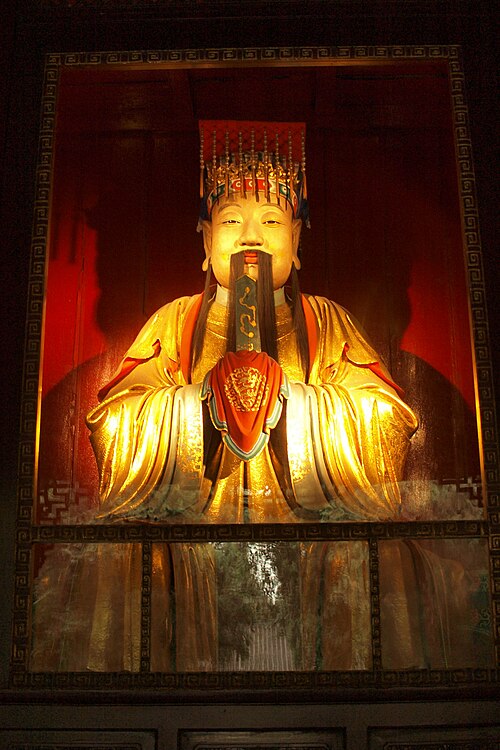
Liu Bei sculpture in the Temple of Marquis Wu, Chengdu, China

Augustus as Jove, holding scepter and orb (first half of 1st century AD).

Emperor Hirohito was the last divine Emperor of Japan.

Hong Xiuquan