Root vegetable
Videos
Root vegetables are underground plant parts eaten by humans and other animals as food. In agricultural and culinary terminology, the term applies to true roots, such as taproots and root tubers, as we
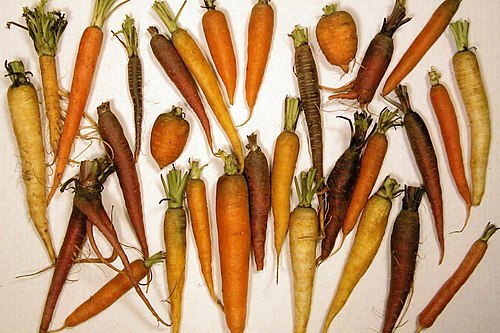
Carrot roots come in various shapes and colors

Taro corms

Ginger rhizomes

Yam tubers
Tuber
Videos
Tubers are a type of enlarged structure that plants use as storage organs for nutrients, derived from stems or roots. Tubers help plants perennate, provide energy and nutrients, and are a means of ase
Root vegetable
…plant parts eaten by humans and other animals as food. In agricultural and culinary terminology, the term applies to true roots, such as taproots and root tubers, as well as non-roots such as bulbs, corms, rhizomes, and stem tubers. Root vegetables are generally energy storage organs containing carbohydrates…

Ulluku (Ullucus tuberosus) tubers

Flowers and tuber of Anredera cordifolia

A young potato tuber

Freshly dug sweet potato plants with tubers