Runes
Videos
Runes are the letters in a set of related alphabets, known as rune-rows, runic alphabets or futharks, native to the Germanic peoples. Runes were primarily used to represent sound values but they were
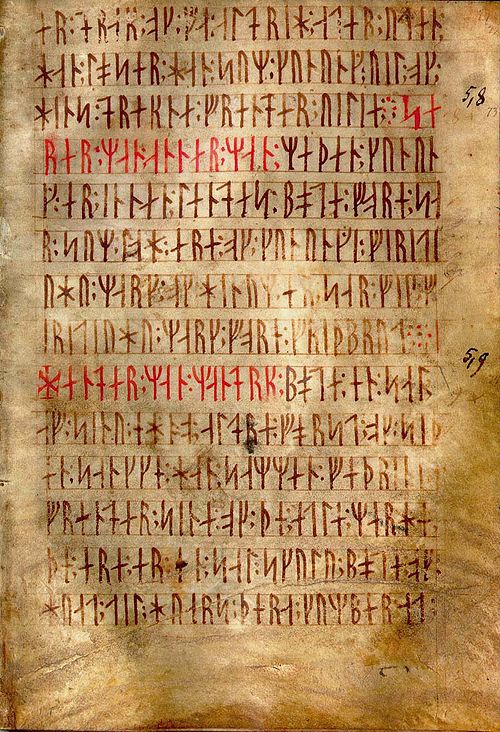
Codex Runicus c. 1300

An inscription using cipher runes, the Elder Futhark, and the Younger Futhark, on the 9th-century Rök runestone in Sweden

A Younger Futhark inscription on the 12th-century Vaksala Runestone in Sweden

Ring of Pietroassa (c. 250–400 AD) by Henri Trenk, 1875
Elder Futhark
Videos
The Elder Futhark, or Pan-Germanic Futhark, is the oldest form of the runic alphabets. It was a writing system used by Germanic peoples in the Migration Period. Inscriptions are found on artifacts inc
Runes
…century, runes were still used in rural Sweden for decorative purposes in Dalarna and on runic calendars. The three best-known runic alphabets are the Elder Futhark (c. AD 150–800), the Anglo-Saxon Futhorc (400–1100), and the Younger Futhark (800–1100). The Younger Futhark is divided further into the long-branch…
![[ek go]dagastiz runo faihido inscription on the 4th century "Einang stone"](https://upload.wikimedia.org/wikipedia/commons/thumb/0/09/Einangsteinen_inscription.jpg/500px-Einangsteinen_inscription.jpg)
[ek go]dagastiz runo faihido inscription on the 4th century "Einang stone"