Gerzog Edinburgski was an armoured cruiser of the General-Admiral class built for the Imperial Russian Navy. She was the sister ship of General-Admiral and was named after Alfred, Duke of Saxe-Coburg

The Russian armoured cruiser Gerzog Edinburgski

Illustration of units of the International Squadron arriving at Suda Bay, Crete, on 21 December 1898. The French protected cruiser Bugeaud, carrying Prince George of Greece and Denmark, who will take up duty as High Commissioner of the Cretan State, leads the column. She is followed (right to left) by Gerzog Edinburgski, the British battleship HMS Revenge, and the Francesco Morosini.
Grand Duchess Maria Alexandrovna of Russia was the sixth child and only surviving daughter of Alexander II of Russia and Marie of Hesse and by Rhine; she was Duchess of Edinburgh and later Duchess of
Russian cruiser Gerzog Edinburgski
…sister ship of General-Admiral and was named after Alfred, Duke of Saxe-Coburg and Gotha, Duke of Edinburgh (Gerzog Edinburgski in Russian) who married Grand Duchess Maria Alexandrovna of Russia. Gerzog Edinburgski was originally to be named Alexander Nevski but was renamed before launching. She was launched in 1875 and served in the Far East…
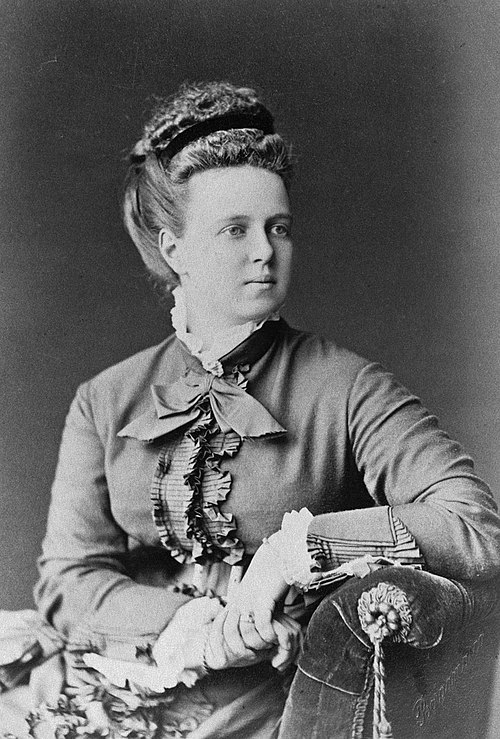
Portrait by Charles Bergamasco, 1876

From left to right: Grand Duchess Maria Alexandrovna, Emperor Alexander II with Grand Duke Sergei Alexandrovich in his lap, Grand Duke Vladimir Alexandrovich, Grand Duke Alexander Alexandrovich on the table with his arms crossed, Grand Duke Alexei Alexandrovich and Tsarevich Nicholas Alexandrovich

Grand Duchess Maria Alexandrovna wearing the traditional dress of ladies of the Russian Imperial court

Grand Duchess Maria Alexandrovna and Prince Alfred around the time they met, 1868