Sîn-šar-iškun
Videos
Sîn-šar-iškun was the penultimate king of the Neo-Assyrian Empire, reigning from the death of his brother and predecessor Aššur-etil-ilāni in 627 BCE to his own death at the Fall of Nineveh in 612 BCE
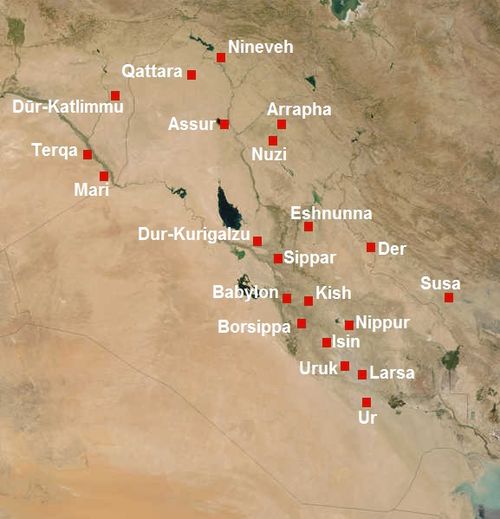
Locations of some major Mesopotamian cities

Letter written by Sîn-šar-iškun to his primary enemy, Nabopolassar of Babylon, in which he recognizes him as king of Babylon and pleads to be allowed to retain his kingdom. The authenticity of the letter is a matter of debate.

Fall of Nineveh by John Martin (1829)
Nabopolassar
Videos
Nabopolassar was the founder and first king of the Neo-Babylonian Empire, ruling from his coronation as king of Babylon in 626 BC to his death in 605 BC. Though initially only aimed at restoring and s
Sîn-šar-iškun
…in the south (neither Sîn-šar-iškun nor Sîn-šumu-līšir had formally proclaimed themselves as kings of Babylon) might be what made it possible for Nabopolassar, a southerner of unclear origin, to rise up and seize power in Babylonia. Sîn-šar-iškun's inability to defeat Nabopolassar, despite repeated attempts…

Clay cylinder of Nabopolassar from Babylon

The ruins of the city of Uruk, where Nabopolassar and his family may have originated

The so-called "Chronicle of Nabopolassar". The cuneiform inscriptions on this clay tablet narrate the chronicle of the years 608-605 BC. After the fall of Nineveh, Naboplolassar vied with Egypt to control Assyria's western territories. His death stopped the campaign and sent his son Nebuchadnezzar II back to Babylon to claim the throne

In the latter part of the Neo-Assyrian king Ashurbanipal's (pictured) reign, when Babylonia was governed by his appointed vassal king Kandalanu, Assyria and Babylonia enjoyed a long period of peace. Nabopolassar's revolt began in the period of turmoil following the deaths of both Ashurbanipal and Kandalanu.