S-Bahn
Videos
S-Bahn is a type of hybrid commuter rail and rapid transit service, originating in German-speaking countries. In general, S-Bahn systems link suburbs with the city centre at moderate speeds, while con
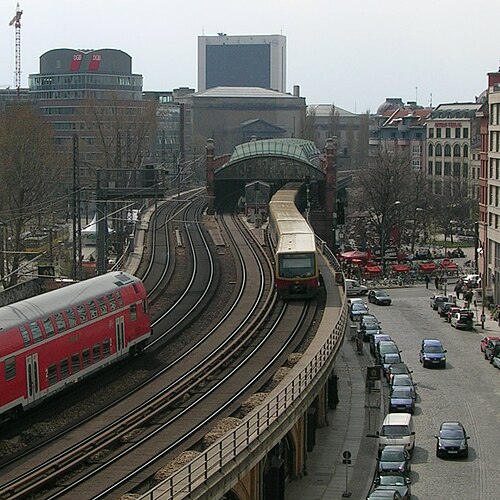
Berlin Stadtbahn. The right side tracks belong to the S-Bahn and serve the station in the distance (Hackescher Markt), while the other two tracks are used by non-stopping mainline trains.

Vesterport S-train station has three entrances. This is the main one.

Vesterport station is located below street level, but is not under ground. Other trains do not stop here, solely S-trains. Compare with picture of Berlin's S-Bahn above. Same concept.

Svanemøllen Station, main entrance
Berlin S-Bahn
Videos
The Berlin S-Bahn is a hybrid rapid transit and suburban rail system in Berlin. The modern incarnation of the system opened in December 1930, succeeding the special fare area Berliner Stadt-, Ring- un
S-Bahn
…Stadtschnellbahn (lit. 'rapid city train'), and Stadtbahn (lit. 'city train'; not to be confused with the modern Stadtbahn). The first such network, the Berlin S-Bahn, began operation in December 1930 and inspired similar systems across Europe. The term "S-Bahn" has since become a generic term for hybrid suburban–urban…

Berlin-Halensee station with Ringbahn train, 2023

Depot at Wannsee, 2022

Berlin S-Bahn was converted from steam to third rail electrification starting in the late 1920s. The rail is bottom-contact. Seen here at the level crossing at Lichtenrade station

Some Type 477 trains, built before World War II, remained in service until the early 21st century.