SEAC (computer)
Videos
SEAC was a first-generation electronic computer, built in 1950 by the U.S. National Bureau of Standards (NBS) and was initially called the National Bureau of Standards Interim Computer, because it was a small-scale computer designed to be built quickly and put into operation while the NBS waited for more powerful computers to be completed. The team that developed SEAC was organized by Samuel N. Alexander. SEAC was demonstrated in April 1950 and was dedicated in June 1950; it is claimed to be the first fully operational stored-program electronic computer in the US.


SEAC's "last printout," November 1954. However SEAC was reassembled successfully and ran for another ten years until its dismantling in 1964. Printout reads: WIPE YOUR EYE5...... I GO AWAY .%...........-

SEAC block diagram

SEAC input/output diagram
The National Institute of Standards and Technology (NIST) is an agency of the United States Department of Commerce whose mission is to promote American innovation and industrial competitiveness. NIST's activities are organized into physical science laboratory programs that include nanoscale science and technology, engineering, information technology, neutron research, material measurement, and physical measurement. From 1901 to 1988, the agency was named the National Bureau of Standards.

Chart of NBS activities, 1915

A mass spectrometer in use at the NBS in 1948
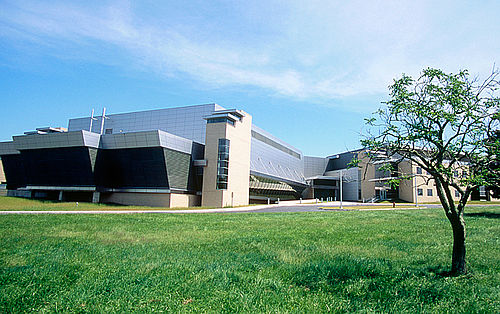
Advanced Measurement Laboratory Complex in Gaithersburg

Aerial view of the Gaithersburg campus in 2019