Sabil (fountain)
Videos
A sabil or sebil is a small kiosk in the Islamic architectural tradition where water is freely dispensed to members of the public by an attendant behind a grilled window. The term is sometimes also us

The sebil-fountain of Abdülhamid I, a historic sebil in Istanbul dating from 1777. It includes both an actual sebil (the curved kiosk with windows) and two wall fountains with taps (çesme in Turkish) on either side.

The street facade of the Sabil of Tusun Pasha (or Sabil of Muhammad Ali), Cairo, completed in 1820.

Water dispensing area inside the sabil. (Sabil of Tusun Pasha or Muhammad Ali, Cairo, 19th century.)

The underground water cistern for the sabil. (Sabil of Tusun Pasha or Muhammad Ali, Cairo, 19th century.)
Salsabil (fountain)
Videos
A salsabil, also known as a shadirwan, is a type of fountain which maximizes the surface area of the water. It is used for evaporative cooling of buildings, cooling and aeration of drinking water, and
Sabil (fountain)
…which supplied the water for distribution. In some cases, the water drawn from the cistern then ran down a decorative carved marble panel called a salsabil, which may also have served the purpose of aerating the water as it came from the cistern. An attendant collected the water and distributed it to…
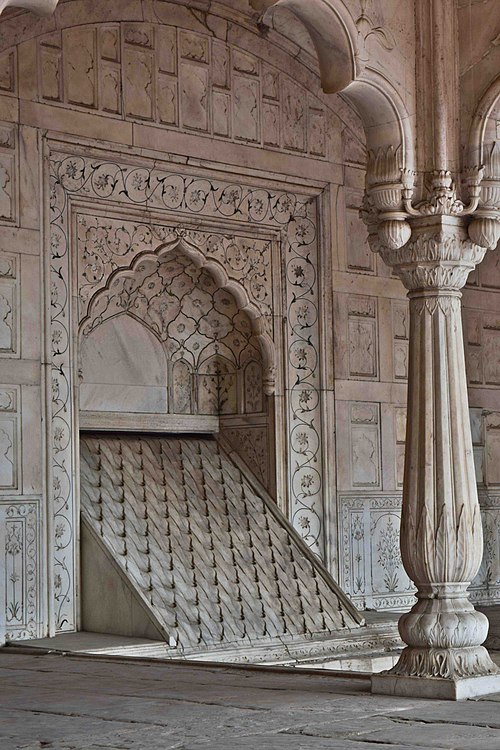
A salasabil (currently dry) in the Red Fort in Delhi, India.

Near-vertical salasabil in the mostly-1500s Agra Fort (dry)

1660s Bibi Ka Maqbara, Aurangabad, Maharashtra, India (dry)

Atrium of the House of the Centenary, Pompeii, mid-2nd century BC (dry)