Sack of Constantinople
Videos
The sack of Constantinople occurred in April 1204 and marked the culmination of the Fourth Crusade. Crusaders sacked and destroyed most of Constantinople, the capital of the Byzantine Empire. After th
Venetian mosaic in the San Giovanni Evangelista depicting the fall of Constantinople, made in 1213


The siege of Constantinople in 1204, by Palma il Giovane

The original Horses of Saint Mark displayed inside St Mark's Basilica in Venice; replicas adorn the outside.
Byzantine Empire
Videos
The Byzantine Empire, also known as the Eastern Roman Empire, was the continuation of the Roman Empire centred on Constantinople during late antiquity and the Middle Ages. Having survived the fall of
Sack of Constantinople
…occurred in April 1204 and marked the culmination of the Fourth Crusade. Crusaders sacked and destroyed most of Constantinople, the capital of the Byzantine Empire. After the capture of the city, the Latin Empire (known to the Byzantines as the Frankokratia, or the Latin occupation) was established and Baldwin IX…

Constantine I, also known as Constantine the Great, was Roman emperor from AD 306 to 337 and the first Roman emperor to convert to Christianity. He founded the city of Constantinople (now Istanbul) and made it the capital of the Empire, which it remained for over a millennium.

The Theodosian Walls of Constantinople, very important during the 717–718 siege
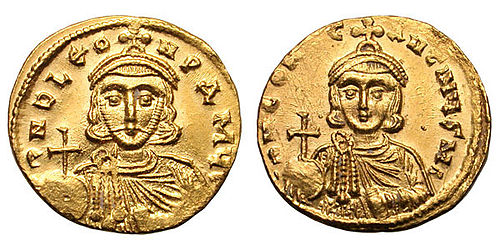
Gold solidus of Leo III (left) and his son and heir, Constantine V (right)

The seizure of Edessa (1031) by the Byzantines under George Maniakes and the counterattack by the Seljuk Turks