Saitō Hajime
Videos
Hajime Saitō was a Japanese samurai of the late Edo period, who most famously served as the captain of the third unit of the Shinsengumi. He was one of the few core members who survived the numerous w
Saitō Hajime in 1897
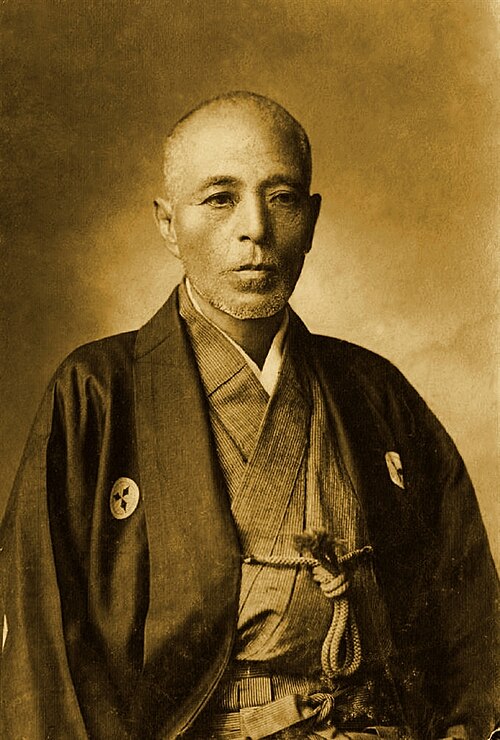

Photo believed to depict Saitō Hajime (as Fujita Gorō) (bottom right encircled) with his police troop.

Saitō (as Fujita Gorō), 53, is seated with his second son Tsuyoshi, his eldest son Tsutomu, and his wife Tokio in 1897, his third son Tatsuo (not pictured) had since adopted into the Numazawa family

Saito's grave at Amidaji, Aizuwakamatsu, Fukushima, Japan in 2008
Okita Sōji
Videos
Okita Sōji was a Japanese samurai and the captain of the first unit of the Shinsengumi, a special police force in Kyoto during the late shogunate period. He was one of the best swordsmen of the Shinse
Saitō Hajime
…Thus the style derived from Ittō-ryū (One sword style). He is also considered to have learned Tsuda Ichi-den-ryū and Sekiguchi-ryū. The same age as Okita Sōji and another member named Tōdō Heisuke, the three shared the distinction of being the youngest in Kondō Isami's group and being among its most gifted…

Portrait of Okita Sōji

Stele of Okita Sōji's last place at Imado Shrine in Asakusa

This souvenir photo from the Meiji era was often wrongly introduced as the photo of Okita Sōji through the modern times; the man in the photo is actually a different person. Currently, no existing photos of Okita Sōji have been discovered.