Sama-Bajau
Videos
The Sama-Bajau include several Austronesian ethnic groups of Maritime Southeast Asia. The name collectively refers to related people who usually call themselves the Sama or Samah; or are known by the
Sabah West Coast Bajau women in traditional dress


Semporna Sabah Malaysia Igal Dancer 01

Bajaus tribe sign at the Mari Mari Cultural Village in Inanam, Kota Kinabalu District of Sabah, Malaysia

Two West Coast Bajau women (Bajau Samah) in traditional dress, Sandakan District, British North Borneo, c. 1920–1930s
Sama–Bajaw languages
Videos
The Sama–Bajaw languages are a well-established group of languages spoken by the Sama-Bajau peoples of the Philippines, Indonesia, and Malaysia.
Sama-Bajau
…horse culture. The following are subgroups that do not self-identify as Sama, although they are culturally related to the Sama people and speak a Sama-Bajaw language: Abaknon (Philippines) – a subgroup from Capul, Northern Samar in the Visayas Islands that speak the Abaknon language. They were colonised and converted…

The Sinama speakers of Semporna, Malaysia are known as Bajau. This Bajau woman wears "borak", the traditional sun protection.

Rowing out from Tinutuꞌ Village, a Sama village outside of Sulu where several Central Sinama dialects are spoken, most notably Sinama Musuꞌ and Sinama Silumpak
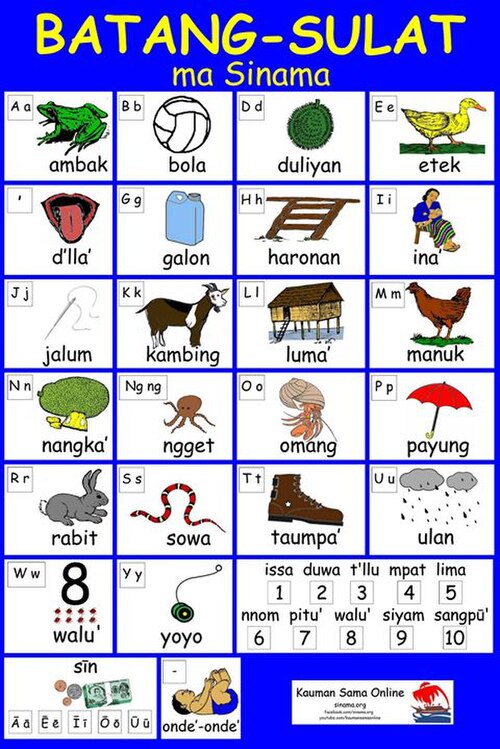
A reading poster for the Sinama language created by Kauman Sama Online for free use

This woman making a traditional mat is a Sama from Siasi who now lives in Semporna, Malaysia.