Samaritan script
Videos
The Samaritan Hebrew script, or simply Samaritan script, is the alphabet used by the Samaritans for their religious and liturgical writings. It serves as the script of the Samaritan Pentateuch, of tex
Samaritan Leviticus


4th-century Samaritan inscription from the Sha'alvim synagogue reading "The Lord will reign forever and ever," on display at the Good Samaritan Museum

Ancient inscription in Samaritan Hebrew. From a photo c. 1900 by the Palestine Exploration Fund.
Aramaic alphabet
Videos
The ancient Aramaic alphabet was used to write the Aramaic languages spoken by ancient Aramean pre-Christian peoples throughout the Fertile Crescent. It was also adopted by other peoples as their own
Samaritan script
…used by the people of Israel and Judah during the Iron Age. In classical antiquity, the better-known "square" Hebrew alphabet—a stylized form of the Aramaic script known as Ashurit (אשורי, “Assyrian”)—came into use and, from the period of the Babylonian exile onward, became the standard script of Jewish writing…

Aramaic inscription from Tayma, containing a dedicatory inscription to the god Salm
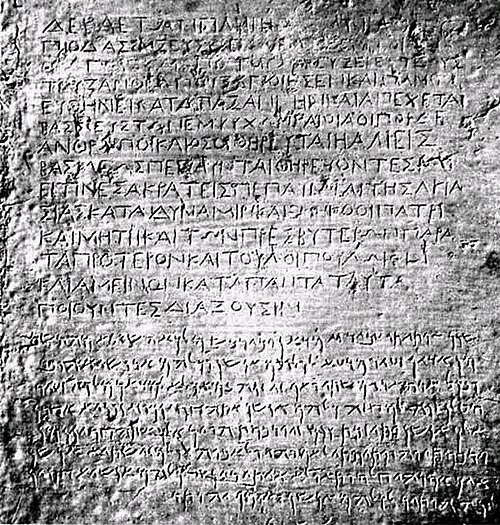
The Kandahar Bilingual Rock Inscription, a Greek and Aramaic inscription by the Mauryan emperor Ashoka at Kandahar, Afghanistan, 3rd century BC

Aramaic inscription of Taxila, Pakistan probably by the emperor Ashoka around 260 BCE