Sand casting
Videos
Sand casting, also known as sand molded casting, is a metal casting process characterized by using sand—known as casting sand—as the mold material. The term "sand casting" can also refer to an object

The cope and drag (top and bottom halves, respectively) of a sand mold, with cores in place on the drag.

Two sets of raw castings (bronze and aluminium), demonstrating the characteristic granular surface texture before finishing. In contemporary design, this "sand skin" is often preserved for its aesthetic value.

Molten metal in a crucible poured into sand form, with surface oxidation and residue typical of the casting process.

Sand molding tools and books used in Auckland and Nelson, New Zealand, between approximately 1946 and 1960
Molding sand
Videos
Molding sand, also known as foundry sand, is a sand that when moistened and compressed or oiled or heated tends to pack well and hold its shape. It is used in the process of sand casting for preparing
Sand casting
…testing methods may be applied before further work is performed. In general, we can distinguish between two methods of sand casting; the first one using green sand and the second being the air set method. These castings are made using sand molds formed from "wet" sand which contains water and organic bonding…
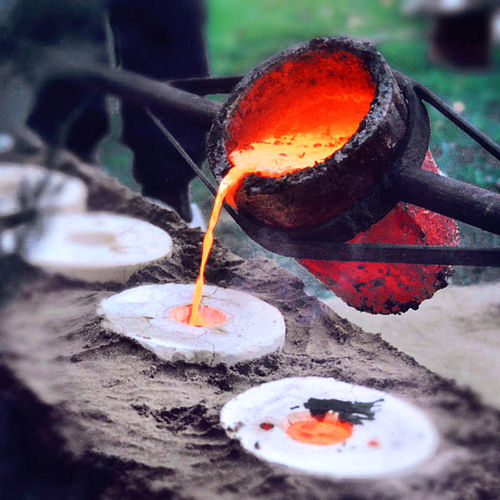
A crucible containing bronze is poured into the Green Sand, which contains a hollow shape below, that will become the finished cast.