Sans-serif
Videos
In typography and lettering, a sans-serif, sans serif, gothic, or simply sans letterform is one that does not have extending features called "serifs" at the end of strokes. Sans-serif typefaces tend t

Rothbury, an early modulated sans-serif typeface from 1915. The strokes vary in width considerably.
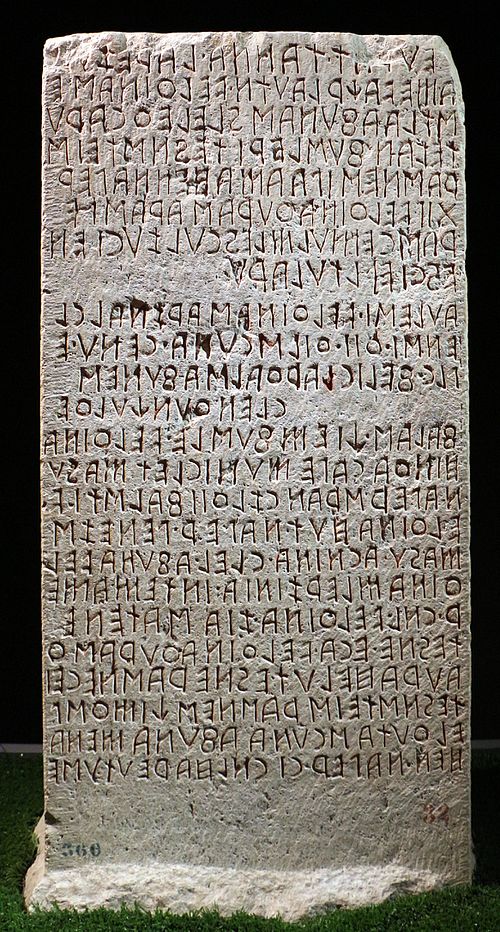
Sans-serif letterforms in ancient Etruscan on the Cippus Perusinus

Roman square capitals, the inspiration for serif letters

A 12th-century Medieval Latin inscription in Italy featuring sans-serif capitals
Gill Sans
Videos
Gill Sans is a humanist sans-serif typeface designed by Eric Gill and released by the British branch of Monotype in 1928. It is based on Edward Johnston's 1916 "Underground Alphabet", the corporate ty
Sans-serif
…ligatures and even swashes in italic. One of the earliest humanist designs was Edward Johnston's Johnston typeface from 1916, and, a decade later, Gill Sans (Eric Gill, 1928). Edward Johnston, a calligrapher by profession, was inspired by classic letter forms, especially the capital letters on the Column…

A drawing and photographed carving by Gill of the "Trajan" capitals on Trajan's Column in Rome, a model for the capitals of Gill Sans and Johnson. Respected by Arts and Crafts artisans as among the best ever drawn, many signs and lettering projects created with an intentionally artistic design are based on them.

An early version of Johnston on a London Underground metal sign. Johnston's design was rendered variably on some older signs; this uses a condensed "R" and four-terminal "W".

The ultra-bold sans-serifs of the Figgins foundry. Gill and Johnston sought to create sans-serif designs that were modern and not as bold as these. Gill argued in his Essay on Typography that such closed-up forms were counterproductively bold and less legible than lighter fonts of normal proportions.

Some of Gill's original art for Gill Sans, showing the original "Q", punctuation and two manicules