Santa Teresa, Rio de Janeiro
Videos
Santa Teresa is a neighborhood in the city of Rio de Janeiro, Brazil. It is located on top of the Santa Teresa hill, by the centre of Rio, and is famous for its winding, narrow streets which are a fav

Santa Teresa tram stop

Convent of Santa Teresa

View of the Convent of Santa Tereza (on the hill, to the right) in a 1790 painting. The pond in front was filled for the construction of the Passeio Público.

The Santa Teresa Tram has run over the Carioca Aqueduct since 1896.
Favela
Videos
Favela is an umbrella name for several types of impoverished neighborhoods in Brazil. The term, which means slum or ghetto, was first used in the Slum of Providência in the center of Rio de Janeiro in
Santa Teresa, Rio de Janeiro
…and prime location. In 2009 the city council started a gentrification program to revitalize the neighborhood. Walls were built to stop the surrounding favelas from growing; and taxes were imposed on water, energy and gas supply in order to decrease the number of poor people. Traditionally Santa Teresa is a…

Rocinha is the largest hill favela in Rio de Janeiro (as well as in Brazil) and the second largest slum and shanty town in Latin America. Although favelas are found in urban areas throughout Brazil, many of the more famous ones exist in Rio.

Rio's Santa Teresa neighborhood features favelas (right) contrasted with more affluent houses (left). The statue Christ the Redeemer, shrouded in clouds, is in the left background.

The lights of Vidigal favela in Rio de Janeiro as seen from Ipanema and Leblon beaches. The cone spire to the far right is part of the Morro Dois Irmãos.
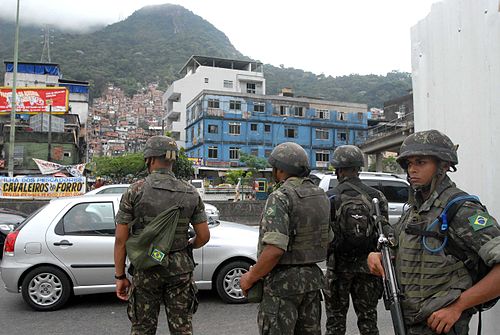
Brazilian troops during an operation in Rocinha