The Sao Khua Formation is a middle member of the Khorat Group. It consists of an alteration of pale red to yellowish-gray, fine to medium-grained sandstone and grayish-reddish brown siltstone and clay. Rare pale red to light gray conglomerates, containing carbonate pebbles, are also characteristic of this formation. This geological formation in Thailand dates to the Early Cretaceous age, specifically the Valanginian through Hauterivian stages.
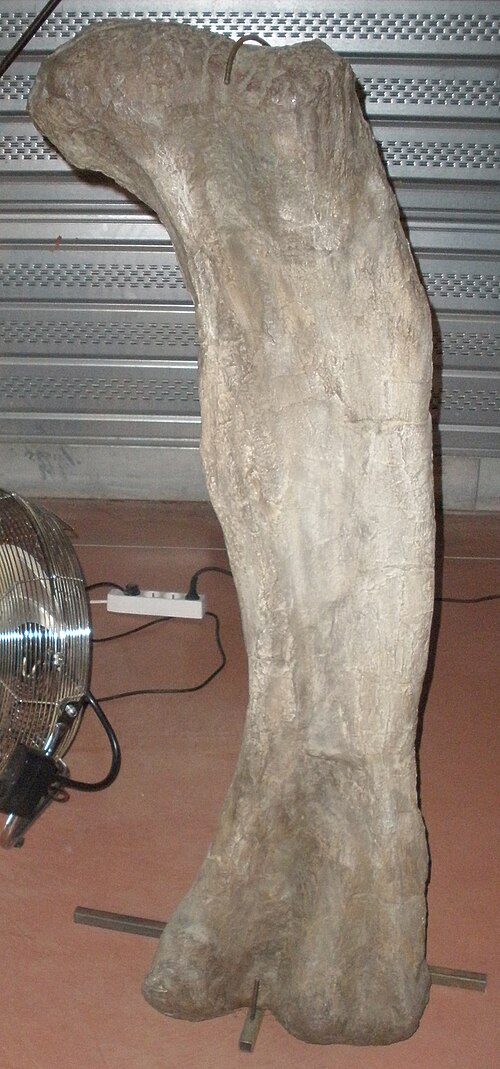
Image: Phuwiangosaurus sirindhornae femur
Image: Siamotyrannus pelvis 01
Siamosaurus is a genus of spinosaurid dinosaur that lived in what is now known as China and Thailand during the Early Cretaceous period and is the first reported spinosaurid from Asia. It is confidently known only from tooth fossils; the first were found in the Sao Khua Formation, with more teeth later recovered from the younger Khok Kruat Formation. The only species Siamosaurus suteethorni, whose name honours Thai palaeontologist Varavudh Suteethorn, was formally described in 1986. In 2009, four teeth from China previously attributed to a pliosaur—under the species "Sinopliosaurus" fusuiensis—were identified as those of a spinosaurid, possibly Siamosaurus. It is yet to be determined if two partial spinosaurid skeletons from Thailand and an isolated tooth from Japan also belong to Siamosaurus.
Tooth of the related genus Spinosaurus, Museo di Storia Naturale A. Stoppani, Lombardy
Spinosaurid teeth are often mistaken for those of plesiosaurs (above) and vice versa, though there are certain differences between their dentition.
Vertebra from specimen SM-KK14, which may belong to Siamosaurus
Image: Siamosaurus suteethorni model