Sarnaism
Videos
Sarnaism is a religious faith of the Indian subcontinent, predominantly followed by indigenous communities of the Chota Nagpur Plateau region across states such as Jharkhand, Odisha, West Bengal, Biha
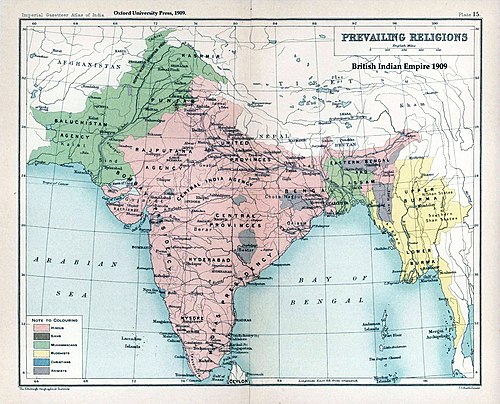
Prevailing religion of British India, 1901 Census.

Sarna worshippers following their religious rites
Santal people
Videos
The Santal are an Austroasiatic-speaking Munda ethnic group of the Indian subcontinent. They constitute the largest tribal community in the Indian states of Jharkhand and West Bengal, and are also pre
Sarnaism
…After India’s independence, it experienced steady growth, incorporating diverse tribal communities into its fold, including larger tribes like the Santal, who had initially refrained from accepting its tenets but gradually aligned with it over the following decades. Politically, Sarnaism grew alongside…

Santals in traditional dress celebrating Baha parab

Santhals in British India, 1868

Santal women

A traditional Dasai dance in Purulia district, West Bengal