Satala Aphrodite
Videos
The Satala Aphrodite is an over-life-sized head of a bronze Hellenistic statue discovered in Satala. Probably created in the 2nd or 1st century BC in Asia Minor, it was acquired by the British Museum
The head of the Satala Aphrodite


Roman Asia Minor in the early 1st century AD, with Armenia Minor as a Roman client state. Its two major centres, Satala and Nicopolis are shown.

A close up view

A drawing of the head in the 9th edition of the Encyclopædia Britannica (1875), two years after its acquisition by the British Museum.
Aphrodite
Videos
Aphrodite is an ancient Greek goddess associated with love, lust, beauty, pleasure, passion, procreation, and as her syncretised Roman counterpart Venus, desire, sex, fertility, prosperity, and victor
Satala Aphrodite
…It has been widely admired since its discovery and likened to the Aphrodite of Knidos by some scholars. It is usually assigned to the Greek goddess Aphrodite, but has been associated with her Armenian equivalent Anahit, whose major temple was located not far from Satala. Consequently, head has been widely…
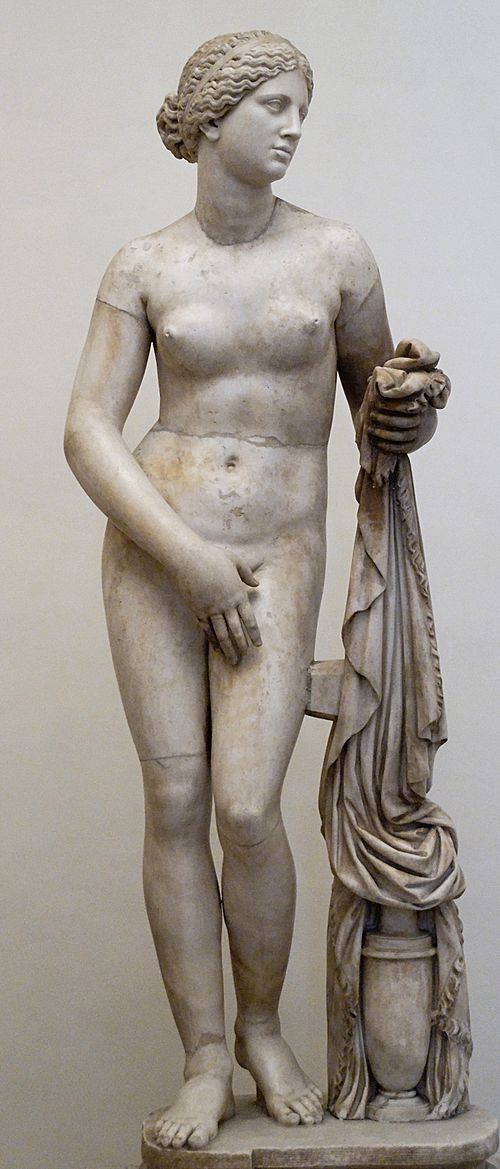
The Ludovisi Cnidian Aphrodite, Roman marble copy (torso and thighs) with restored head, arms, legs and drapery support

Late second-millennium BC nude figurine of Ishtar from Susa, showing her wearing a crown and clutching her breasts

Early fifth-century BC statue of Aphrodite from Cyprus, showing her wearing a cylinder crown and holding a dove

Aphrodite Ourania, draped rather than nude, with her foot resting on a tortoise (Louvre)