Scientist
Videos
A scientist is an expert in one or more specific fields of science and who habitually uses scientific methods in carrying out scientific research to advance knowledge in science.

Pierre Curie and Marie Curie demonstrating an apparatus that detects radioactivity. They received the 1903 Nobel Prize in Physics for their scientific research; Marie also received the 1911 Nobel Prize in Chemistry.

"No one in the history of civilization has shaped our understanding of science and natural philosophy more than the great Greek philosopher and scientist Aristotle (384–322 BC), who exerted a profound and pervasive influence for more than two thousand years" —Gary B. Ferngren

Georgius Agricola gave chemistry its modern name. Generally referred to as the father of mineralogy and the founder of geology as a scientific discipline.
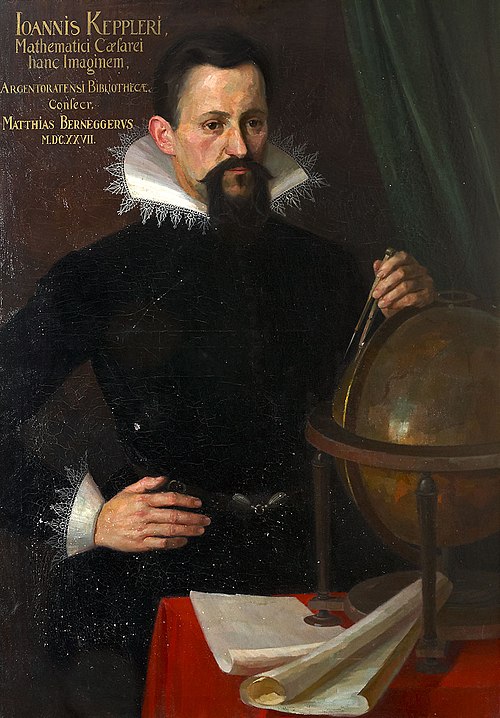
Johannes Kepler, one of the founders and fathers of modern astronomy, the scientific method, natural and modern science.
Physicist
Videos
A physicist is a scientist who specializes in the field of physics, which encompasses the interactions of matter and energy at all length and time scales in the physical universe. Physicists generally
Scientist
…Paleoclimatologist Paleoecologist Paleogeologist Paleoseismologist Palynologist Petrologist Sedimentologist Seismologist Speleologist Volcanologist Physicist Acoustician Agrophysicist Astrophysicist Atmospheric physicist Atomic physicist Biological physicist Chemical physicist Computational physicist Cosmologist…

Albert Einstein, a key theoretical physicist in the twentieth century who developed the theory of relativity and parts of early quantum theory

In an 18th-century experiment in "natural philosophy" (later to be called "physics") English scientist Francis Hauksbee works with an early electrostatic generator.

Experimental physicists at work at the accelerator laboratory of the University of Jyväskylä (Finland)