Scorpion II
Videos
Photos
Scorpion II, also known as King Scorpion, was a ruler during the Protodynastic Period of Upper Egypt.

Pharaoh Scorpion II on the Scorpion Macehead, Ashmolean Museum

Torso of a man with the Horus name of King Scorpion below the left breast. Anorthositic gneiss, Protodynastic period, circa 3200 BCE. Munich, Staatliches Museum Ägyptischer Kunst, ÄS 7149

Macehead of Scorpion II

Possible Mesopotamia–Egypt trade routes from the 4th millennium BCE
Naqada III
Videos
Photos
Naqada III is the last phase of the Naqada culture of ancient Egyptian prehistory, dating from approximately 3200 to 3000 BC. It is the period during which the process of state formation, which began in Naqada II, became highly visible, with named kings heading powerful polities. Naqada III is often referred to as Dynasty 0 or the Protodynastic Period to reflect the presence of kings at the head of influential states, although, in fact, the kings involved would not have been a part of a dynasty. In this period, those kings' names were inscribed in the form of serekhs on a variety of surfaces including pottery and tombs.
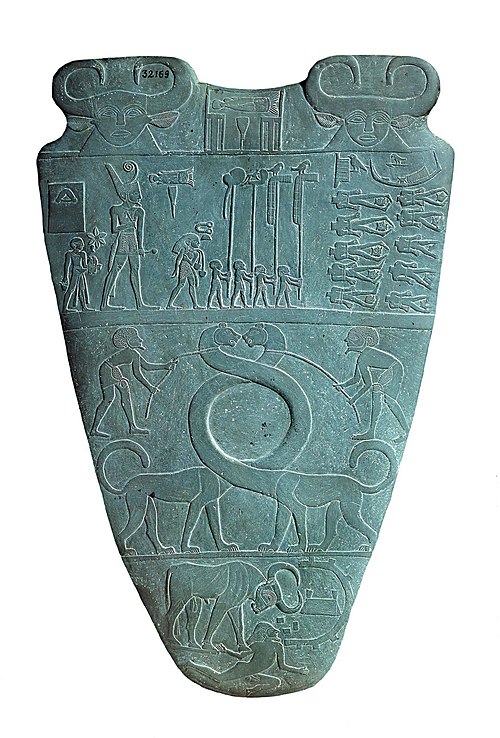
The Narmer Palette, thought to mark the unification of Upper and Lower Egypt; note the images of the goddess Bat at the top, as well as the serpopards that form the central intertwined image.

Hunters Palette, circa 3100 BC

"Four Dogs Palette" (3300–3100 BC)

Fragment of a ceremonial palette illustrating a man and a type of staff, ca. 3200–3100 BC