Second Temple
Videos
The Second Temple was the temple in Jerusalem that replaced Solomon's Temple, which was destroyed during the Babylonian siege of Jerusalem in 587 BCE. The Second Temple was constructed around 516 BCE

Model of Herod's Temple (inspired by the writings of Josephus) displayed within the Holyland Model of Jerusalem at the Israel Museum

Rebuilding of the Temple (illustration by Gustave Doré from the 1866 La Sainte Bible)

Herod's Temple as imagined in the Holyland Model of Jerusalem; east at the bottom

The Royal Stoa in the Holyland Model of Jerusalem
Jerusalem during the Second Temple period describes the history of the city during the existence there of the Second Temple, from the return to Zion under Cyrus the Great to the siege and destruction

Holyland Model of Jerusalem at the Israel Museum, depicts the city of Jerusalem, circa early first century CE. Looking west, with the Susa gate in the foreground wall in front of the Temple.
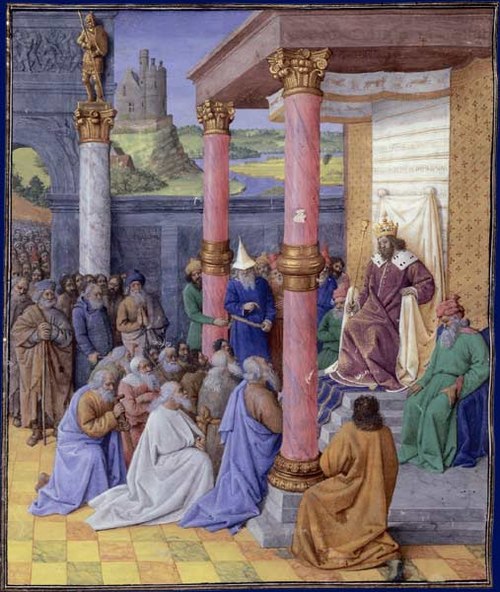
Cyrus the Great allows the Jews to return to Zion. Jean Fouquet, 1470.

Alexander the Great in the Temple of Jerusalem. Sebastiano Conca, circa 1750.

Jason's Tomb