Self-immolation
Videos
Self-immolation is the act of setting oneself on fire. It is mostly done for political or religious reasons, often as a form of protest or in acts of martyrdom, and known for its disturbing and violen
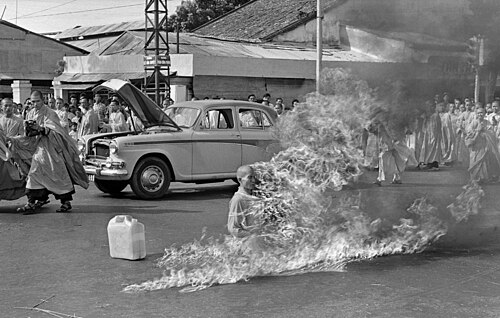
In 1963, Thích Quảng Đức protested by self-immolation during South Vietnam's Buddhist crisis.

The self-immolation (jauhar) of the Rajput women, during the Siege of Chittorgarh in 1568

A Hindu widow burning herself with the corpse of her husband (sati), 1657

"Samosozhigateli (those who burn themselves)" by Grigoriy Myasoyedov, depicting Old Believers
Jauhar
Videos
Jauhar, sometimes spelled Jowhar or Juhar, was a practice of mass self-immolation by Rajput kshatriya women and girls in the Indian subcontinent to avoid capture, sex slavery, enslavement, and rape wh
Self-immolation
…sacrificial meal (mola salsa); to sacrifice" in ancient Roman religion. In the Mewar region of India, women practiced a form of self-immolation called Jauhar to avoid being raped by invading armies. Self-immolators frequently use accelerants before igniting themselves. This, combined with the self-immolators…

The Rajput ceremony of Jauhar, 1567, as depicted by Ambrose Dudley in Hutchinsons History of the Nations, c. 1910

Sultan Alau'd Din put to Flight; Women of Ranthambhor commit Jauhar. Indian, Pahari style painting from c. 1825