Sequential art
Videos
In comics studies, sequential art is a term proposed by comics artist Will Eisner to describe art forms that use images deployed in a specific order for the purpose of graphic storytelling or conveyin

Although separated spatially on the page, the frames of this comic represent (among other transitions) the passage of time.

Eadweard Muybridge was interested in what closely-spaced sequential photography could show about motion; his works blur the line between science and art, although they are not proper comics.
Comics
Videos
Comics is a medium used to express ideas with images, often combined with text or other visual information. It typically takes the form of a sequence of panels of images. Textual devices such as speec
Sequential art
…order for the purpose of graphic storytelling (i.e., narration of graphic stories) or conveying information. The best-known example of sequential art is comics. The term "sequential art" was coined in 1985 by comics artist Will Eisner in his book Comics and Sequential Art. Eisner analyzed this form into four…

Little Nemo, Winsor McCay, 1906

Manga, Hokusai, early 19th century
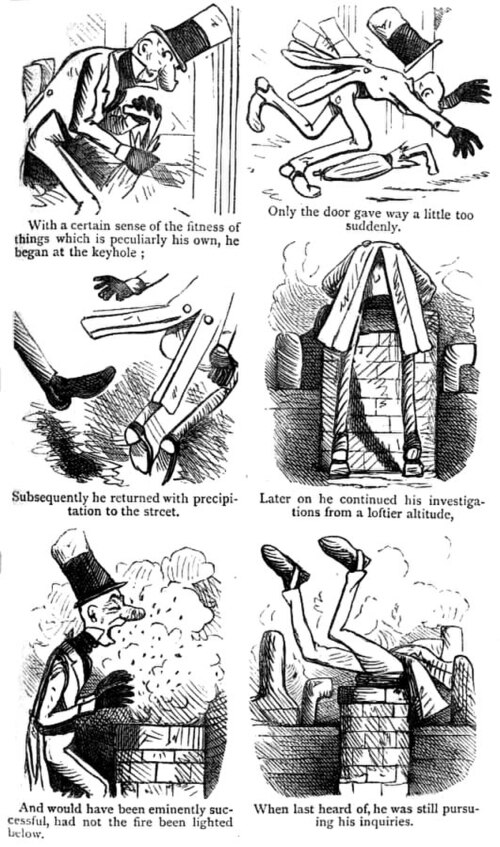
Ally Sloper in Some of the Mysteries of Loan and Discount, Charles Henry Ross, 1867

The Yellow Kid, R. F. Outcault, 1898