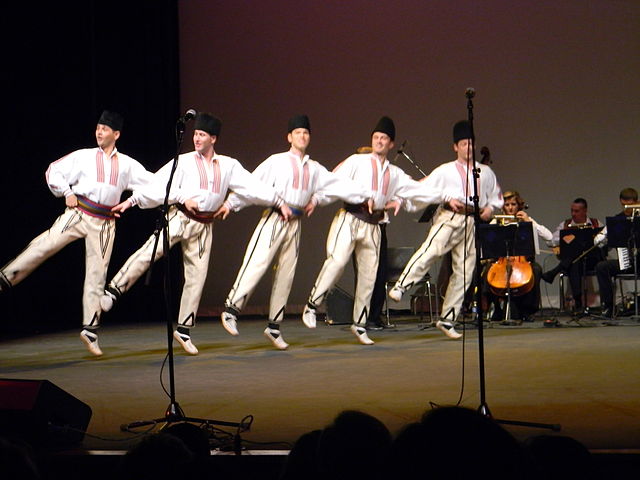
Dancing tradition in Serbia is represented by various styles of dances in the country and it is called Kolo. The word Kolo originated from the Slavic word meaning a ‘wheel,’ circle, or circuit. As with other aspects of Serbian culture, different forms of dances originated in different parts of Serbia, developed according to the local traditions and also acquired elements from other parts of the country. Kolo used to be performed near churches, at war fronts, weddings, and other occasions; the Serbian community described it as a circle dance around the church. At these celebrations, the Serbians start a circle dance, then, people hold each other’s hands, making a chain or a union, following the same rhythm; their hands are either in a V or W formation.
Ensemble Kolo
Dance from Gnjilane, Ensemble Kolo
Dance from Pirot
Dance from the Timok Valley
Gjilan or Gnjilane is the sixth most populous city in Kosovo and it serves as both a municipality and the administrative center of the Gjilan District. The municipality has a population of 90,178 with approximately 54,239 inhabitants residing in the urban area. It is located in the east of Kosovo, in the region of Anamorava, and is well connected with the capital city of Kosovo, Pristina, as well as other surrounding cities such as Ferizaj, Kamenica, Preševo and Bujanovac.
Image: Gjilani pas dite
Image: Objekti i Kajmekamllakut
Image: Ora në Gjilan
Image: Xhamia Derëmahallës në Gjilan