The Shakespeare authorship question is the argument that someone other than William Shakespeare of Stratford-upon-Avon wrote the works attributed to him. Anti-Stratfordians—a collective term for adher

John Shakespeare's house in Stratford-upon-Avon is believed to be Shakespeare's birthplace.

Shakespeare's name was hyphenated on the cover of the 1609 quarto edition of the Sonnets.

Ben Jonson's "On Poet-Ape" from his 1616 collected works is taken by some anti-Stratfordians to refer to Shakespeare.

The effigy of Shakespeare's Stratford monument as it was portrayed by Dugdale in 1656, as it appears today, and as it was portrayed in 1748 before the restoration.
William Shakespeare
Videos
William Shakespeare was an English playwright, poet and actor. He is widely regarded as the greatest writer in the English language and the world's pre-eminent dramatist. He is often called England's
Shakespeare authorship question
…The Shakespeare authorship question is the argument that someone other than William Shakespeare of Stratford-upon-Avon wrote the works attributed to him. Anti-Stratfordians—a collective term for adherents of the various alternative-authorship…
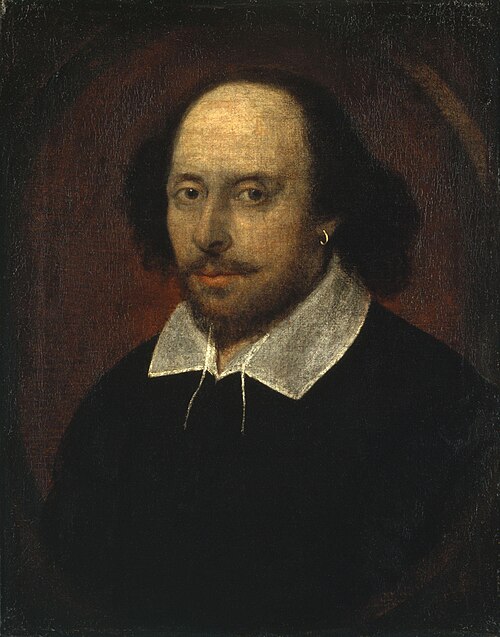
The Chandos portrait, likely depicting Shakespeare, c. 1611
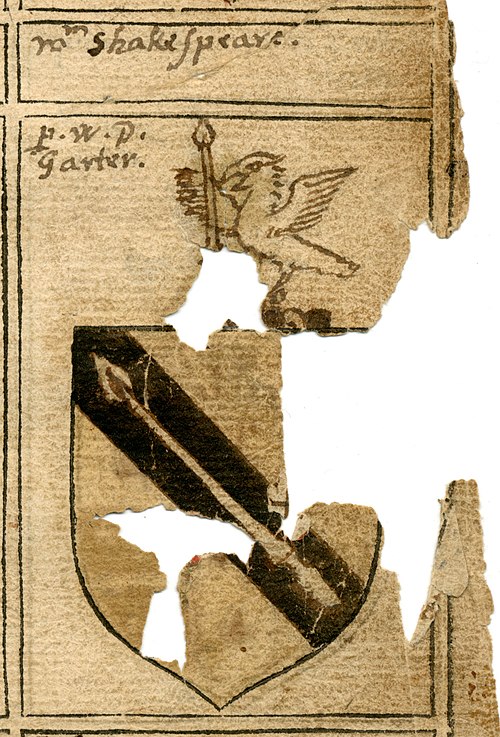
Shakespeare's coat of arms, from the 1602 book The book of coates and creasts. Promptuarium armorum. It features spears as a pun on the family name.
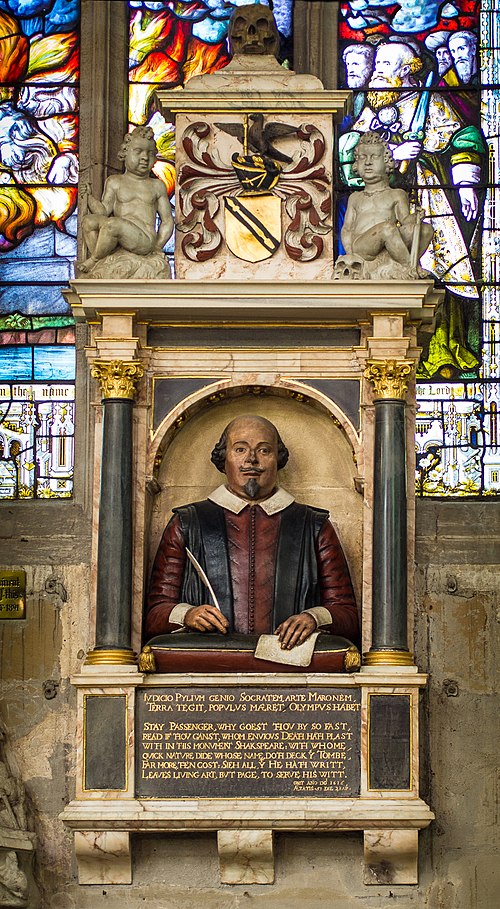
Shakespeare's funerary monument in Stratford-upon-Avon