Sibyl
Videos
The sibyls were prophetesses or oracles in Ancient Greece.
Statue in the Temple of Zeus at Aizanoi, believed to depict a sibyl


Michelangelo's Delphic Sibyl, Sistine Chapel ceiling

Michelangelo's Libyan Sibyl, Sistine Chapel ceiling

Sibyl by Francesco Ubertini, c. 1525
Sibylline Books
Videos
The Sibylline Books were a collection of oracular utterances, set out in Greek hexameter verses, that, according to tradition, were purchased from a sibyl by the last King of Rome, Lucius Tarquinius S
Sibyl
…the Oscans in the fifth century destroyed the tradition, but provides a terminus ante quem for a Cumaean sibyl. She is said to have sold the original Sibylline books to Tarquinius Superbus, the last king of Rome. In Virgil's Fourth Eclogue, the Cumaean sibyl foretells the coming of a savior—possibly a flattering…

Michelangelo's rendering of the Erythraean Sibyl

Tarquin the Proud receives the Sibylline Books (1912 illustration)
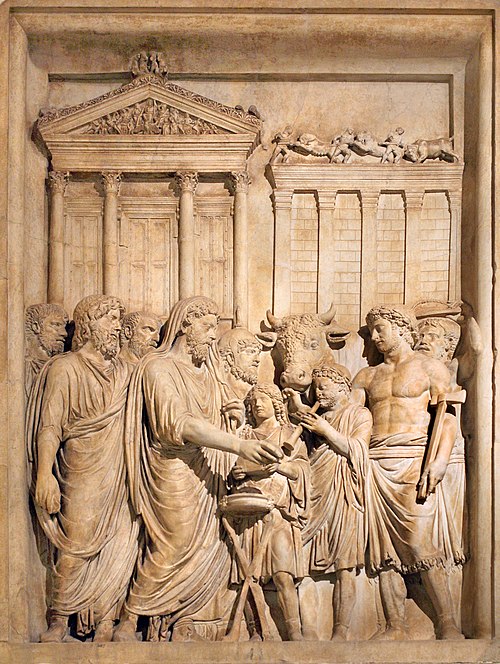
Relief of Marcus Aurelius sacrificing at the fourth temple of Jupiter

16th-century illustration of the Cumaean Sibyl (Amalthea) burning some of the Sibylline books while Tarquin (confused with Lucius Tarquinius Priscus) watches.