Sidon
Videos
Sidon, or Saida, is the third-largest city in Lebanon. It is located on the Mediterranean coast in the South Governorate, of which it is the capital. Tyre, to the south, and the Lebanese capital of Be

Saida's Sea Castle

Persian style bull protome found in Sidon gives testimony of the Achaemenid rule and influence. Marble, 5th century BC
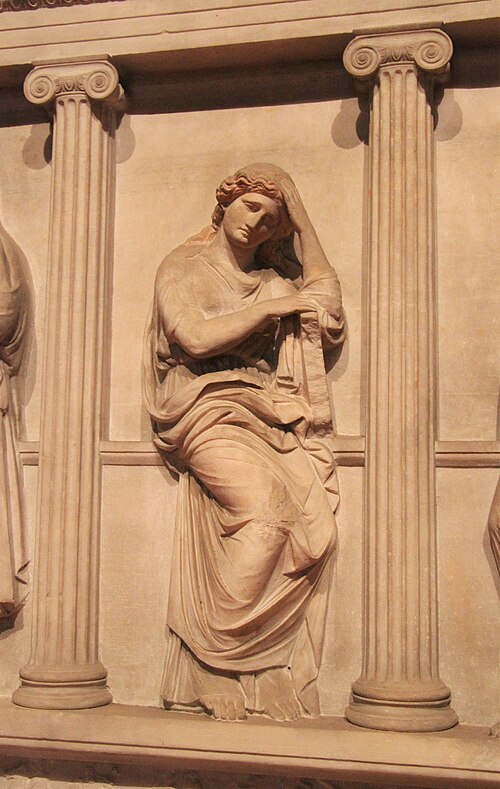
Tomb of the Mourning Women, Hellenistic necropolis of Sidon, now in the Istanbul Archaeology Museums

Sidon Sea Castle, built by the Crusaders in AD 1228
Phoenicia
Videos
The Phoenicians were an ancient Semitic-speaking people who inhabited city-states in Canaan along the Levantine coast of the eastern Mediterranean, primarily in present-day Lebanon. Their maritime civ
Sidon
…of Genesis, Sidon was the first-born son of Canaan, who was a son of Ham, making Sidon a great-grandson of Noah. In antiquity, Sidon was a significant Phoenician city. It was nestled on a mainland promontory and had two harbors. Throughout ancient history, Sidon had many conquerors: Assyrians, Babylonians…

Approximate extent of Phoenician settlements and trade routes c. 800 BC.

Two bronze fragments from an Assyrian palace gate depicting the collection of tribute from the Phoenician cities of Tyre and Sidon (859–824 BC). British Museum.

Phoenicians build pontoon bridges for Xerxes I of Persia during the second Persian invasion of Greece in 480 BC (1915 drawing by A. C. Weatherstone).

Achaemenid-era coin of Abdashtart I of Sidon, who is seen at the back of the chariot, behind the Persian King