Siege of Edessa (1146)
Videos
The siege of Edessa in October–November 1146 marked the permanent end of the rule of the Frankish Counts of Edessa in the city on the eve of the Second Crusade. It was the second siege the city had su

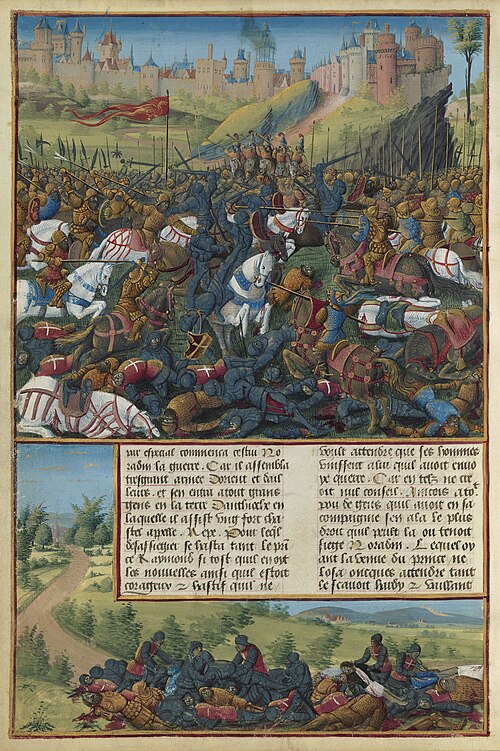
Battle of Edessa in 1146, illustrated by Jeanne Montbaston (1337), Bibliothèque Nationale de France
Nur al-Din Zengi
Videos
Al-Malik al-Adil Abu al-Qasim Nūr al-Dīn Maḥmūd bin Imad al-Dīn Zengī, commonly known as Nur ad-Din or Nureddin, and al-Malik al-Adil, was a Turkoman member of the Zengid dynasty, who ruled the Syrian
Siege of Edessa (1146)
…Baldwin of Marash recaptured the city by stealth but could not take or even properly besiege the citadel. After a brief counter-siege, Zangid governor Nūr al-Dīn took the city. The population was massacred and the walls razed. This victory was pivotal in the rise of Nūr al-Dīn and the decline of the Christian…

Coinage of Nur al-Din (Aleppo mint). Obverse: Two Byzantine-style imperial figures standing facing, holding between them labarum set on three steps; stars, name and titles of Nur al-Din Mahmud, and blundered Greek legends in field. Reverse: Christ standing facing; titles of Nur al-Din Mahmud and blundered Greek legends in field.
Nūr-ad-Din's victory at the Battle of Inab, 1149. Illustration from the Passages d'outremer, c. 1490.

A brother of Nur al-Din, Qutb al-Din Mawdud ruled concurrently in the Mosul region from 1149 to 1170. Coinage dated to AH 556 (1160-1161 CE).