The signing of the United States Declaration of Independence occurred primarily on August 2, 1776, at the Pennsylvania State House, later renamed Independence Hall, in Philadelphia. The 56 delegates t

John Trumbull's 1819 painting, Declaration of Independence, depicts the five-man drafting committee of the Declaration of Independence presenting their work to the Second Continental Congress

The 56 signatures on the Declaration of Independence
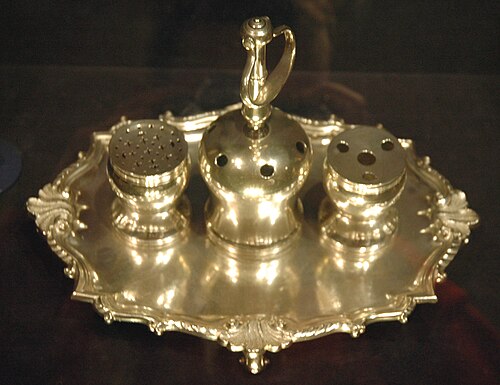
The Syng inkstand was used during the 1776 signing of the Declaration and the 1787 signing of the U.S. Constitution

The Memorial to the 56 Signers of the Declaration of Independence in Washington, D.C.'s Constitution Gardens
The Declaration of Independence, headed The unanimous Declaration of the thirteen united States of America on the document directed to be engrossed by Congress on July 19, 1776, is the founding docume
Signing of the United States Declaration of Independence
…Independence Hall, in Philadelphia. The 56 delegates to the Second Continental Congress represented the Thirteen Colonies, of which 12 voted to approve the Declaration of Independence on July 4, 1776. The New York delegation abstained because they had not yet received authorization from Albany to vote on the issue of independence…

The 1823 facsimile of Timothy Matlack's engrossed copy of the Declaration of Independence

Thomas Jefferson, the principal author of the Declaration

The Assembly Room in Independence Hall in Philadelphia, where the Second Continental Congress unanimously adopted the Declaration of Independence

Writing the Declaration of Independence, 1776, a 1900 portrait by Jean Leon Gerome Ferris depicting Franklin, Adams, and Jefferson working on the Declaration