Sigurd the Stout
Videos
Sigurd Hlodvirsson, popularly known as Sigurd the Stout from the Old Norse Sigurðr digri, was an Earl of Orkney. The main sources for his life are the Norse Sagas, which were first written down some t

Excerpt from Njáls saga in the Möðruvallabók (AM 132 folio 13r) circa 1350
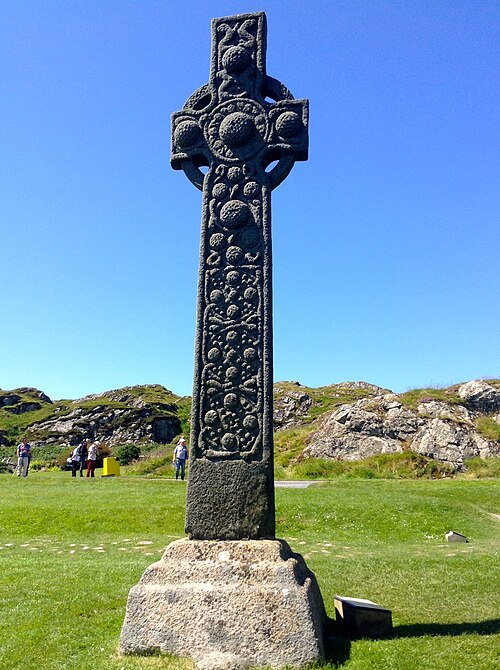
St Martin's Cross on Iona dates from about 800 AD, and would have been a landmark when Earl Sigurd ruled the Hebrides.

King Olaf Tryggvason of Norway, who is said to have forcibly Christianised Orkney. Painting by Peter Nicolai Arbo.

Battle of Clontarf, oil on canvas painting by Hugh Frazer, 1826
Thorfinn the Mighty
Videos
Thorfinn Sigurdsson, also known as Thorfinn the Mighty, was an 11th-century Jarl of Orkney. He was the youngest of five sons of Jarl Sigurd Hlodvirsson and the only one resulting from Sigurd's marriag
Sigurd the Stout
…that it means Caithness. During Sigurd's tenure the earldom approached its high point and his influence was perhaps only exceeded by that of his son Thorfinn. Sigurd's uncle Ljot had been killed in war against the Scots, and Sigurd soon faced trouble from his southern neighbours. According to the Orkneyinga…

The Brough of Deerness - a Viking age ecclesiastical ruin here is associated with Thorkel Fosterer.

A coin from the reign of Olaf Haraldsson of Norway dated 1023–28.

Kalf Arnesson with the young Magnus at the Battle of Stiklestad: 19th century illustration by Halfdan Egedius

Papa Stronsay, the supposed location of Rognvald Brusason's death at the hands of Thorkel Fosterer