Simurrum
Videos
Simurrum was an important city state of the Mesopotamian area from around 2000 BCE to 1500 BCE, during the period of the Akkadian Empire down to Ur III. The Simurrum Kingdom disappears from records after the Old Babylonian period. It is thought that in Old Babylonian times its name was Zabban, a notable cult center of Adad. It was neighbor and sometimes ally with the Lullubi kingdom.
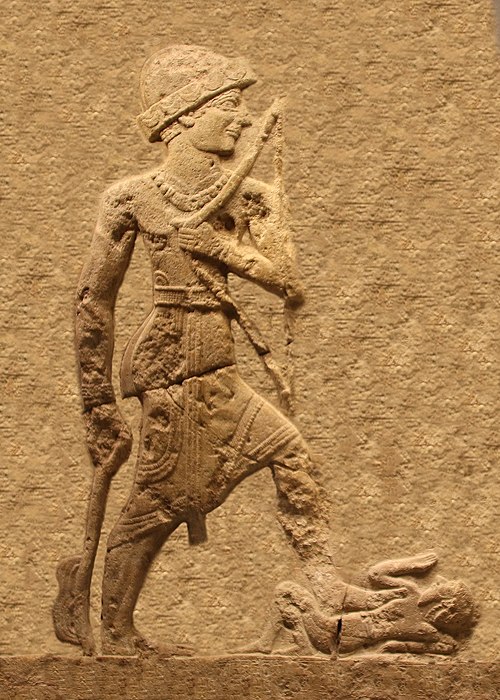
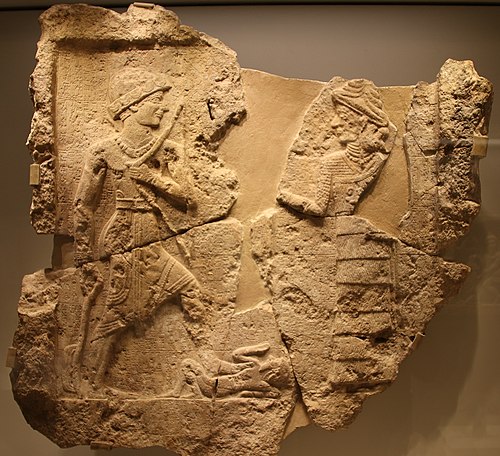
King Iddin-Sin of the Kingdom of Simurrum, holding an axe and a bow, trampling a foe (c. 2000 BCE). Israel Museum.
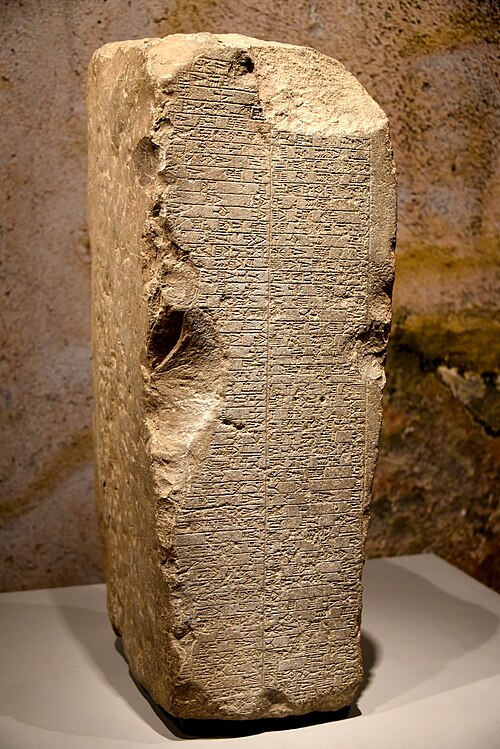
Stela of Iddi-Sin, King of Simurrum. It dates back to the Old-Babylonian Period. From Qarachatan Village, Sulaymaniyah Governorate, Iraqi Kurdistan. The Sulaymaniyah Museum, Iraq

Sarpol-e Zahab, relief I. Beardless warrior with axe, trampling a foe. Sundisk above. A name "Zaba(zuna), son of ..." can be read. He is usually considered as a ruler of the Lullubi, but he could be a ruler of the Kingdom of Simurrum, son of Iddin-Sin.
Anubanini rock relief
Videos
The Anubanini petroglyph, also called Sar-e Pol-e Zohab II or Sarpol-i Zohab relief, is a rock relief from the Akkadian Empire period or the Isin-Larsa period and is located in Kermanshah Province, Iran. The rock relief is believed to belong to the Lullubi culture and is located 120 kilometers away from the north of Kermanshah, close to Sarpol-e Zahab. Lullubi reliefs are the earliest rock reliefs of Iran, later ones being the Elamite reliefs of Eshkaft-e Salman and Kul-e Farah.

Original relief.

Components of the relief (extracted): king Anubanini trampling a foe, goddess Ishtar, two groups of prisoners, and an inscription in Akkadian language.

Transcription

Photograph by Ernst Herzfeld