Sinicization of Tibet
Videos
The sinicization of Tibet includes the programs and laws of the Chinese government to force cultural assimilation in Tibetan areas of China, including the Tibet Autonomous Region and the surrounding T

Monument to the Peaceful Liberation of Tibet, Potala Square, Lhasa in 2009 celebrating the People's Liberation Army entering Tibet, built just outside the protective zone and buffer zone of the World Heritage Site.

A sign (in Tibetan and Chinese) indicating surveillance cameras near the Monument to the Peaceful Liberation of Tibet, Lhasa, Tibet, 2018
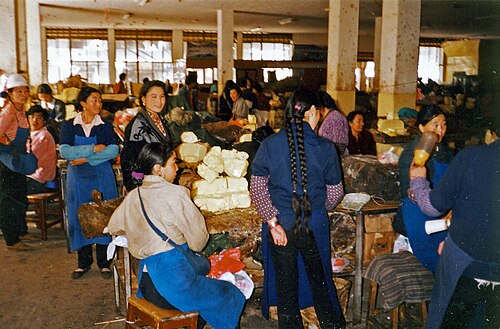
Market in Lhasa, 1993
The Monument to the Peaceful Liberation of Tibet stands in the southern part of the Potala square in Lhasa, Tibet Autonomous Region just outside the protective zone and buffer zone of the World Herita
Sinicization of Tibet
…Monument to the Peaceful Liberation of Tibet, Potala Square, Lhasa in 2009 celebrating the People's Liberation Army entering Tibet, built just outside the protective zone and buffer zone of the…

The Monument to the Peaceful Liberation of Tibet in the Potala square (2007)

The monument lit-up at night, with waterworks in front of it (2006)

Left group of statues outside the memorial