Siward, Earl of Northumbria
Videos
Siward or Sigurd was an important earl of 11th-century northern England. The Old Norse nickname Digri and its Latin translation Grossus are given to him by near-contemporary texts. He emerged as a reg

Siƿard eorl (spelled with a wynn) in a manuscript of the Anglo-Saxon Chronicle (c. 1200)

Coin of King Edward the Confessor

Anachronistic early 19th-century depiction by John Martin of Mac Bethad (centre-right) watching Siward's Northumbrian army approaching (right)

The Death of Earl Siward (1861) by James Smetham, a 19th-century representation of Earl Siward readying for death
Macbeth
Videos
The Tragedy of Macbeth, often shortened to Macbeth, is a tragedy by William Shakespeare, estimated to have been first performed in 1606. It dramatises the physically violent and damaging psychological
Siward, Earl of Northumbria
…Siward defeated Mac Bethad in battle in 1054. More than half a millennium later the adventure in Scotland earned him a place in William Shakespeare's Macbeth. Siward died in 1055, leaving one son, Waltheof, who would eventually become Earl of Northumbria in 1072. St Olave's church in York and nearby Heslington…
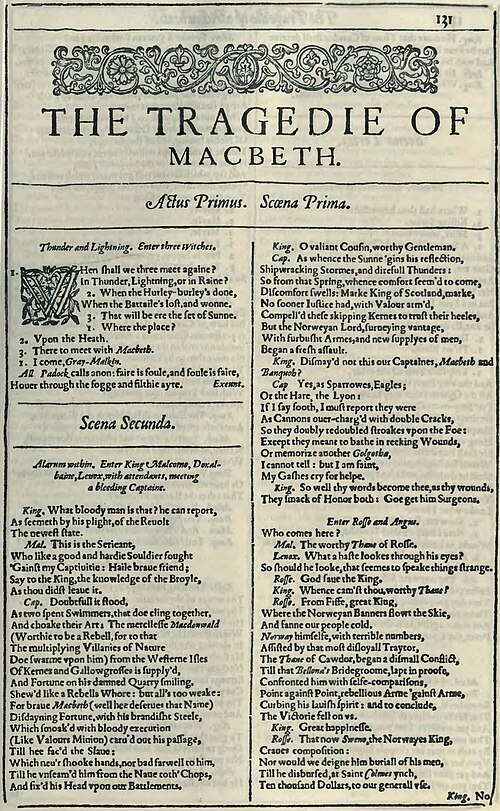
Title page of the part in the First Folio

Macbeth and Banquo encounter the witches for the first time.
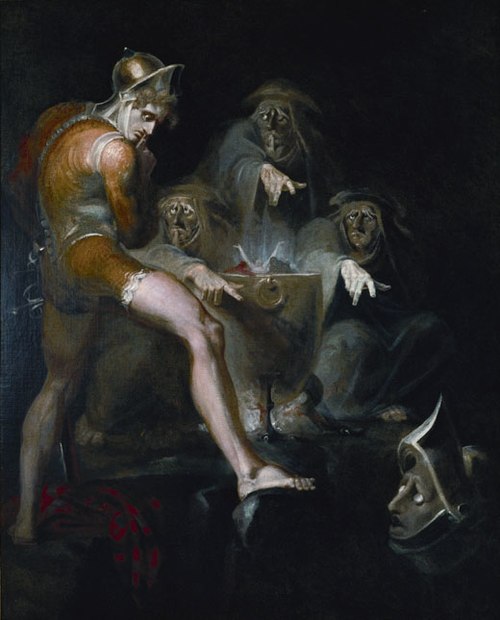
Macbeth consulting the Vision of the Armed Head by Johann Heinrich Füssli

Lady Macbeth Sleepwalking by Henry Fuseli, 1784